
Proposal automation your reps use and your ops team controls
Turn CRM deal data into proposals your reps can tailor, with pricing and content controls managed by ops. Let buyers review, sign and pay through one link.
4.6 out of 5 from 936 G2 reviews

Rated on G2 for return on investment and contract management





Where manual proposals slow the sales process
An automated cycle with a manual middle
A lead can be scored in seconds but the proposal still takes hours to put together, so the cycle stalls right at the moment that decides whether the deal closes or cools.
Deals go quiet and forecasts drift
When follow-up depends on a rep remembering to chase, deals go quiet without anyone noticing. The pipeline still reads healthy and the forecast drifts.
Rollouts that end as shelfware
After a long implementation and a go-live, sales quietly routes around the tool. The operator who championed it ends up defending the budget.
Connect proposal creation to your CRM workflow
Reps copy deal details into a document, adjust the pricing and check the terms before sending. Those manual steps slow proposal creation and leave room for errors.
Create proposals from CRM deal data
Proposals pre-fill from a deal record without manual re-keying, so reps start from the right customer, contact and deal details.
Templates and pricing are admin-controlled. Only admins can edit templates and locked blocks, so reps can't change terms, and access to each template can be set by admins.
Explore automation features
Connect proposals to your CRM and payment tools
Qwilr integrates with HubSpot, Salesforce, Pipedrive, Zoho CRM and Microsoft Dynamics 365. QwilrPay takes cards, Apple Pay, Google Pay and bank payments such as ACH, BECS and SEPA, depending on country.
Buyers sign within the proposal, without moving to a separate signing tool.
Explore integrations
See when buyers open it and what they read
Get an email the first time a buyer opens a proposal, then see how long they spend on each section.
Reps use that reading activity to time the follow-up and decide what to talk about.
Explore buyer insights
How TravelBank brought proposals and contracts into one system
TravelBank's product and pricing data changes substantially every couple of months, and old pricing kept surfacing in Word and PowerPoint files while the current data sat in Salesforce. They had planned to buy separate content and contract management tools, quoted at $40,000 to $50,000. Qwilr covered both for 87% less and cut document generation time by 30%.
“The ultimate proof that we'd invested in the right solution was mid-COVID. Our business model was overhauled and in 2 weeks, every single document had to reflect new pricing, products and imagery. We achieved it, but only because our whole document system was run on Qwilr.”
Connor Lawrence, Director of Revenue Operations
Read the TravelBank story
Ops keeps control after go-live
Start with one proposal template, then add the content and pricing rules your team needs. Ops manages the templates as your sales process changes.
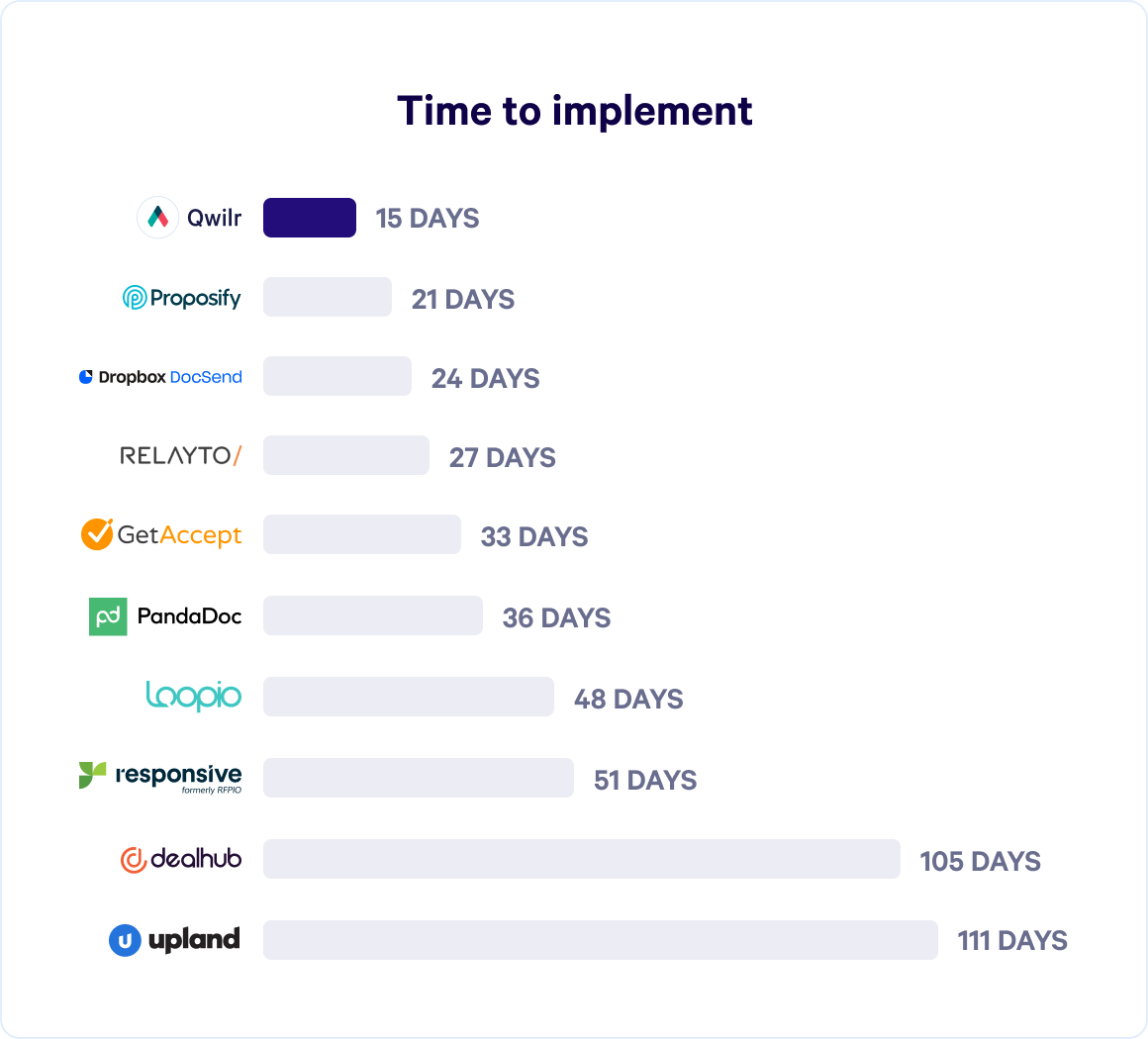
A first proposal can go out in days. ShowingTime built their templates in three to four weeks alongside the Salesforce integration, and ops still owns those templates afterwards.
Security and access controls for procurement
The detail procurement asks for is on the Trust Center.
Secure
Completed a SOC 2 Type 2 audit, renewed annually, on AWS infrastructure.
Compliant
GDPR compliant, with a DPA available on request. PCI DSS compliant payment processing through Stripe.
Private
Role-based access control and single sign-on, including SAML. Data handling and residency detail is on the Trust Center.
Reliable
A public status page with full incident history, and availability monitored around the clock.
Questions revenue operations teams ask
Proposal automation for RevOps creates proposals from CRM deal data, with pricing, terms and templates controlled by the ops team. It suits revenue operations, sales ops and GTM engineering teams who want the proposal step to follow the same rules as the rest of the pipeline. Qwilr's automations create proposals from deal records, and buyer views and acceptances feed back into your process.
Yes. The Qwilr API creates pages from a template or from saved blocks, and sends buyer events to your systems by webhook. Zapier and Make cover the same ground without code.
Qwilr integrates with HubSpot, Salesforce, Pipedrive, Zoho CRM and Microsoft Dynamics 365. Deal data from the CRM fills the proposal with the customer name, contact, deal value and line items. The full list is on the integrations page.
Qwilr has quoting built into the proposal page, with pricing tables, optional items, quantities with minimums and maximums, and packages. For many sales teams that covers the quoting work without a separate system. Heavy CPQ engines are built for large catalogues with complex pricing and take longer to roll out. Teams with that level of complexity keep CPQ for configuration and use Qwilr for the buyer-facing proposal.
Qwilr is the proposal and quote layer between your CRM and the signed deal. It doesn't try to replace your CRM, CPQ, forecasting or attribution tools. If reps are copying deal details into documents between a scored lead and a closed deal, that is the gap Qwilr fills. Our guide to the RevOps tech stack shows where it fits.