
- Architectural Design Proposal Template
Architectural Design Proposal Template
Win architecture projects with a proposal that shows your design thinking, sets out your services and lets clients choose a package and sign online.
About this template
Use this template if you're an architect or architectural designer pitching a new project. It covers an introduction, the client's challenges and priorities, from design quality and function to sustainability and fit with the site, what success looks like, 12-month goals, your approach, your services, three design packages and an agreement the client signs online.
Swap the example images for your own projects, since your past work is the strongest part of an architecture proposal. See how Qwilr works for construction and property businesses.
Want a version built around your brand and services? Qwilr's design team can create one for you. Talk to our team
What's included?
- Introduction
- Challenges
- Client priorities
- What success looks like
- 12-month goals
- Our approach
- Our services
- Packages
- Agreement and e-signature
The sections in this architectural design proposal template
Cover page
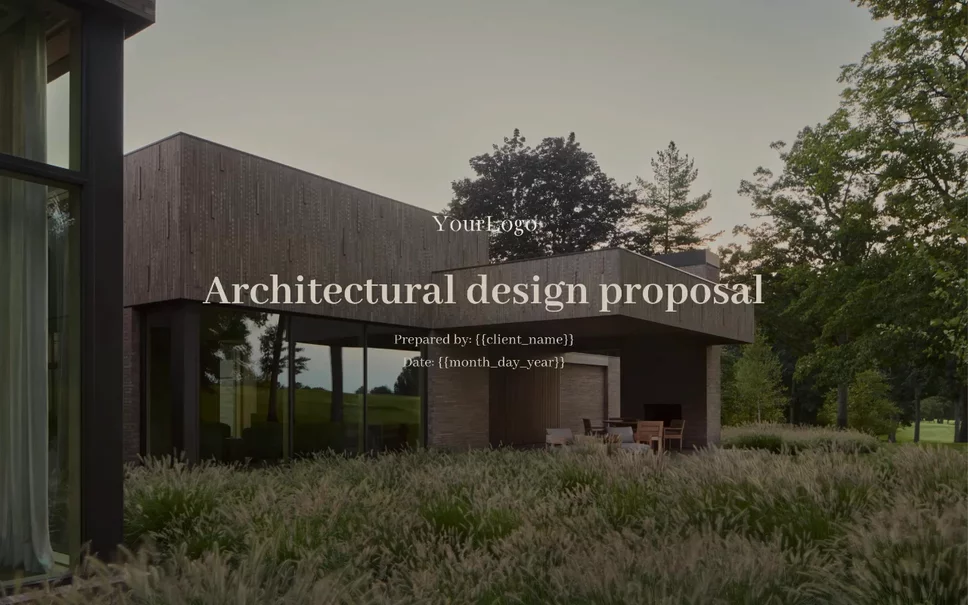
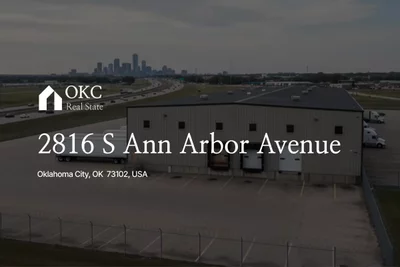
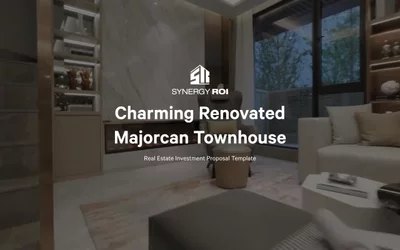
Open with a strong image of your work and the client's name, so the proposal shows your design sense from the first page.
What success looks like
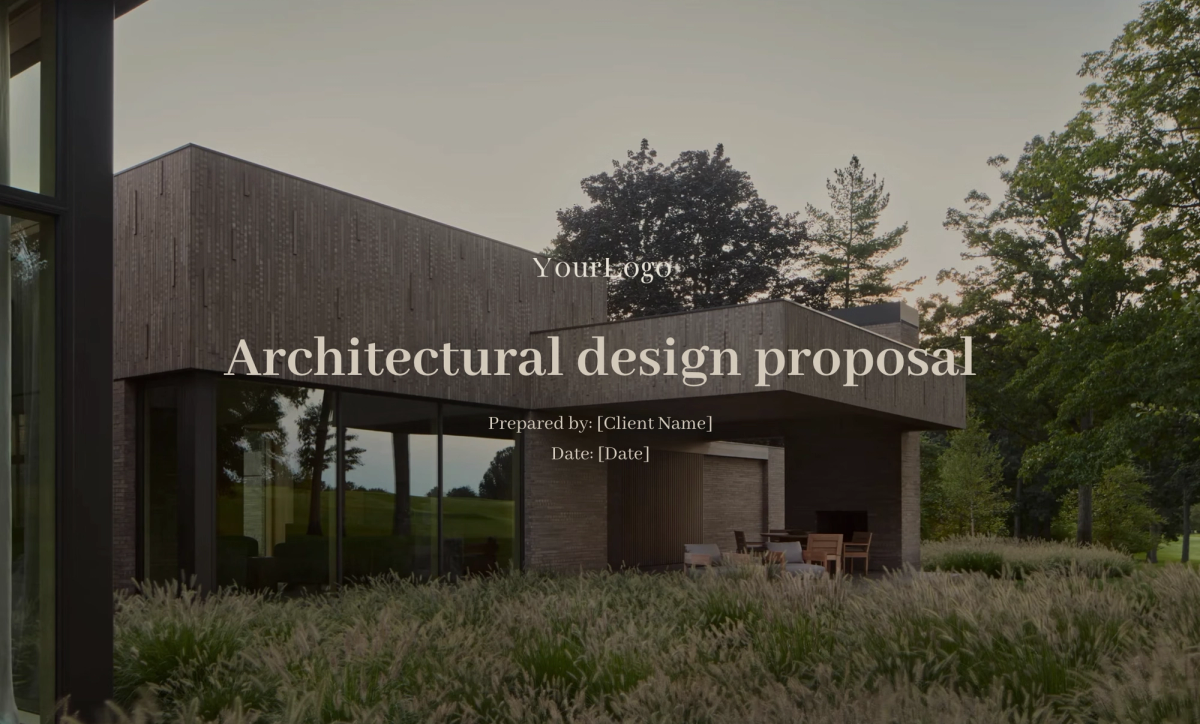
Describe what a successful project will deliver, from a striking and practical building to sustainable choices that suit the site.
Our services
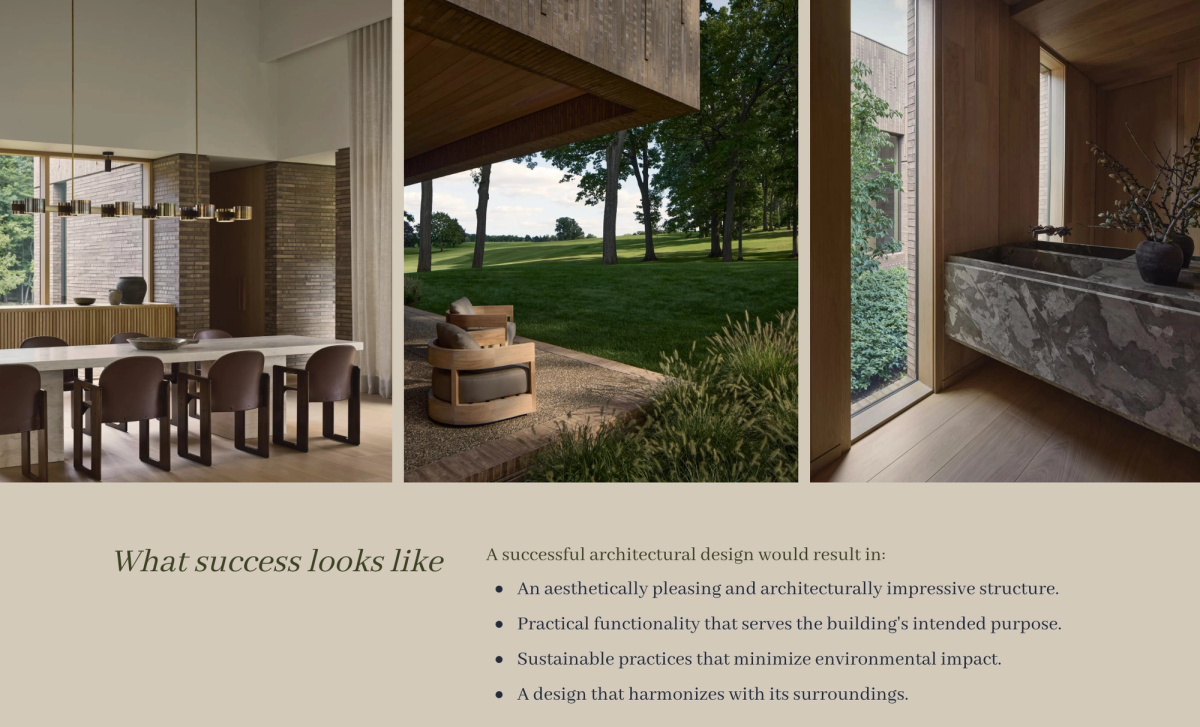
List your services in expandable sections, such as design, functionality, sustainability and support during construction.
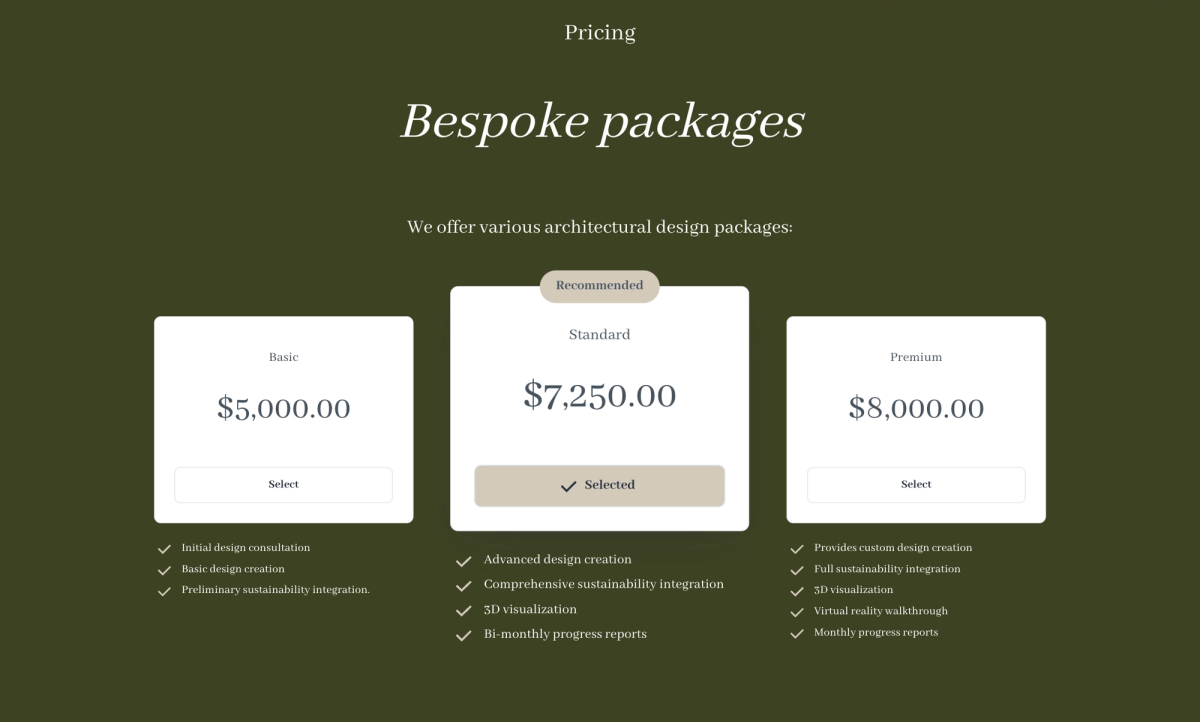
Packages
Offer three design packages, from initial consultation and basic design to full visualisation and progress reports, so the client can choose their scope. See how Qwilr quotes work
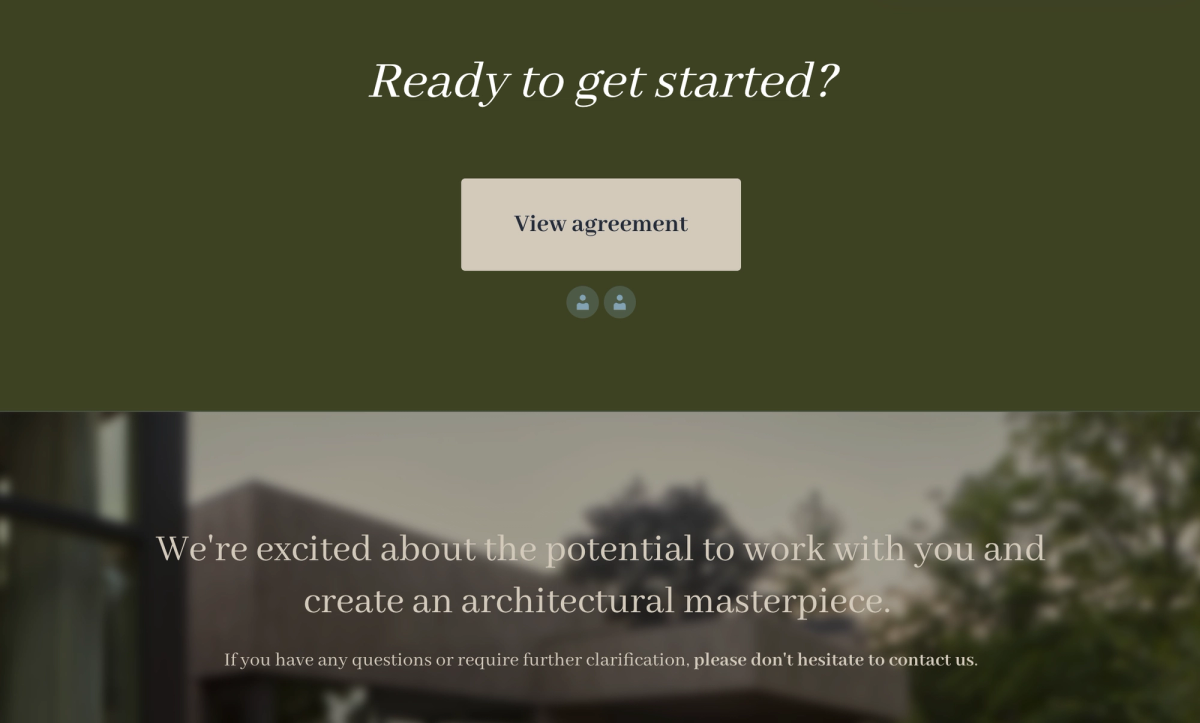
Agreement
End with a clear call to action and your terms, so the client can review and sign. More on e-signatures and agreements
Why design studios use this template
Design work sells on how it looks, so a proposal should look as good as the work. MV Design, a one-person interior rendering studio, now takes 90% of its revenue through proposals that clients accept and pay for on the spot with QwilrPay. Read the case study
Rated a Leader for proposal software on G2



Why Qwilr?
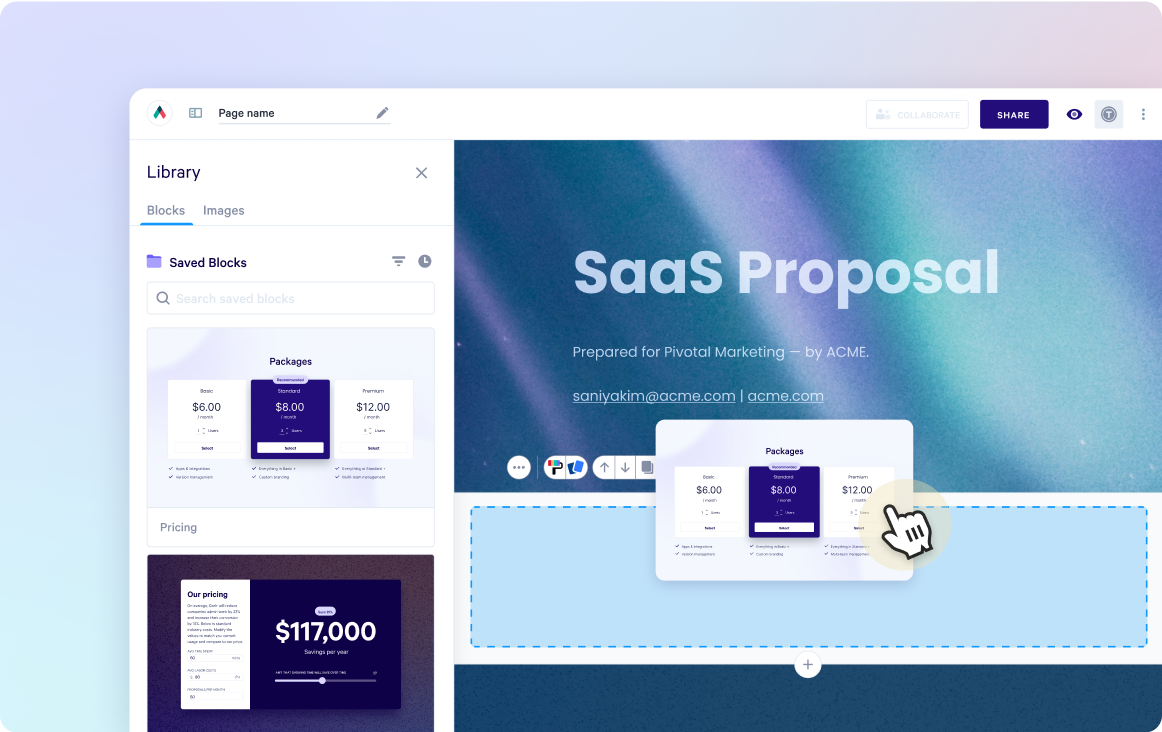
Design interactive proposals
Impress buyers with interactive proposals that stand out. Qwilr’s drag-and-drop editor makes it easy to create on-brand, stunning collateral — no design skills needed. Add videos, dynamic pricing, and ROI calculators to deliver a unique experience, while automated brand customizations ensure every proposal looks professional.
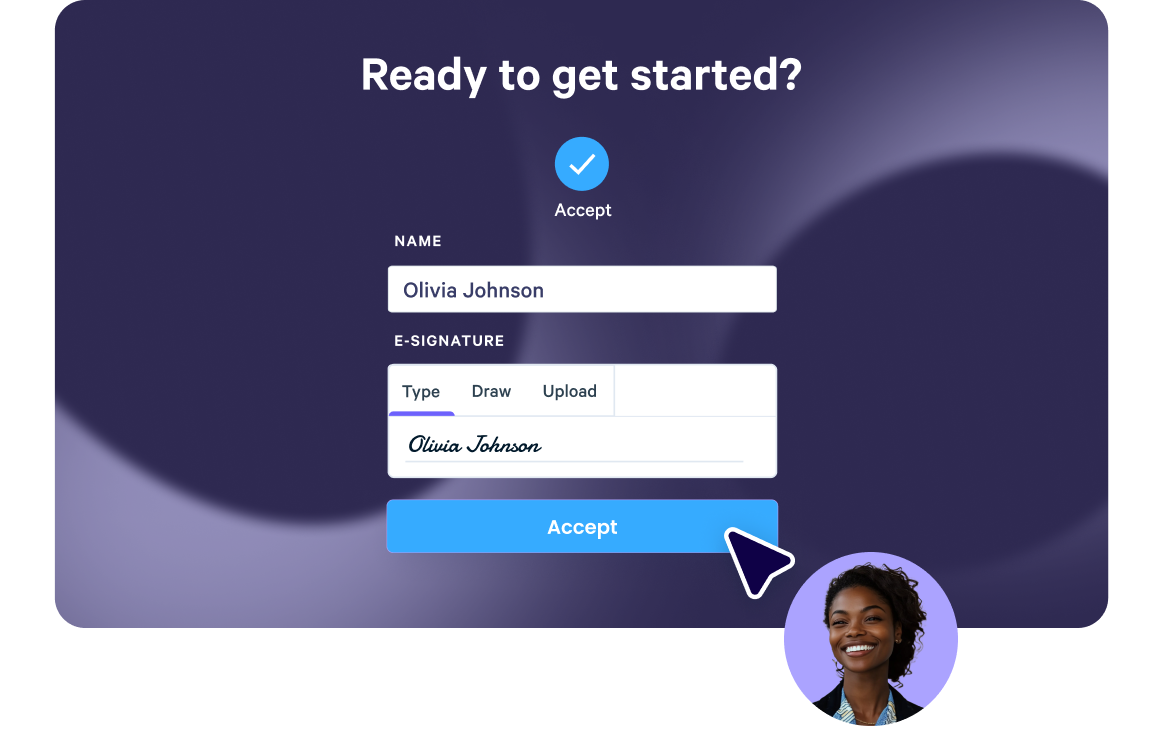
Built-in e-sign functionality
Combine stunning proposals, plain-text agreements, and secure e-signatures in one tool. Add print-friendly agreements alongside dynamic content and collect legally compliant e-signatures with ease. Track progress, capture multiple signatures, and close deals faster with Qwilr’s integrated e-sign functionality.
Real-time proposal analytics
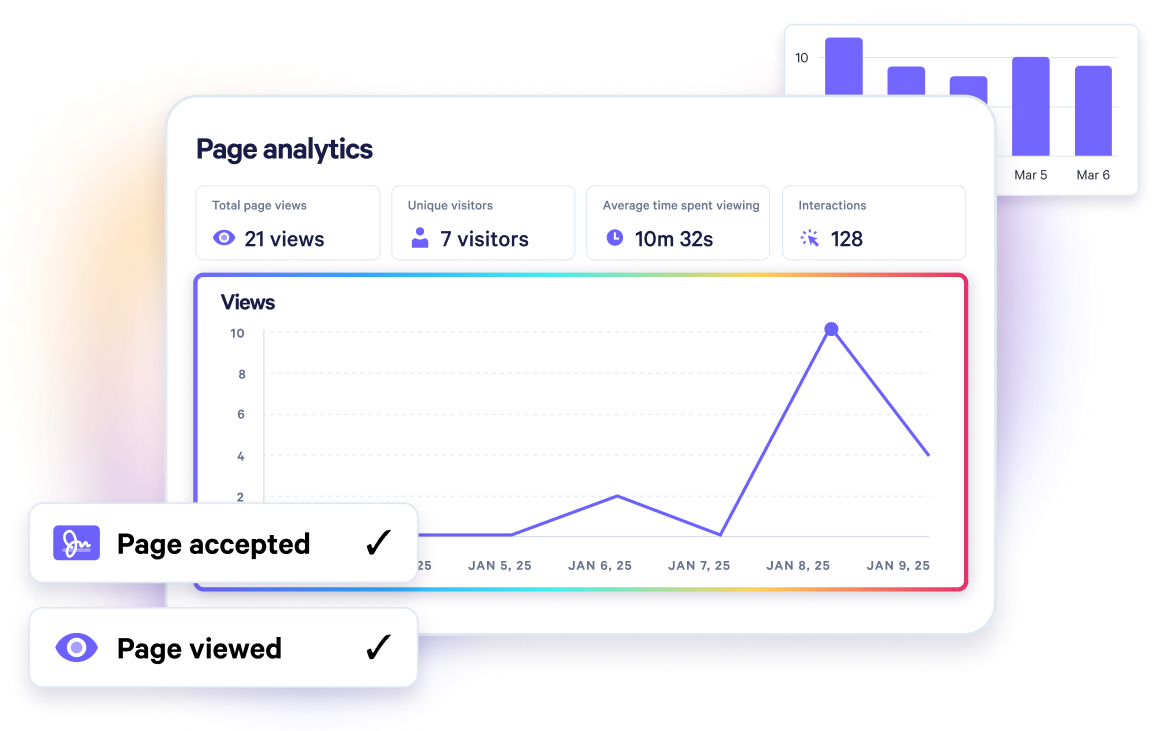
Qwilr’s analytics provide full visibility into buyer engagement. Track when proposals are opened, signed, or shared, and get instant notifications for key buyer activities. See what buyers click on, how they engage, and prioritize follow-ups based on real-time insights—all designed to help close deals faster.
Templates for every use case
Explore templates for sales, marketing, customer success and more, or see how Qwilr works for your industry.
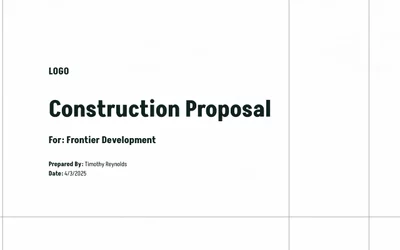
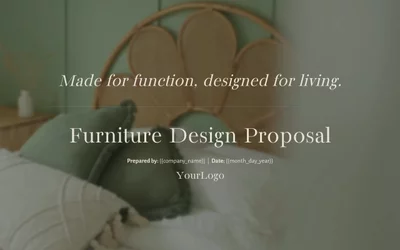
Explore construction and property templates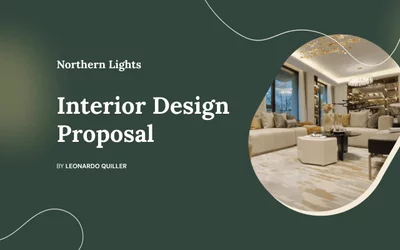
Frequently asked questions
An introduction to your practice, the client's brief and priorities, the scope of services by stage, the deliverables at each stage, a timeline, your fees and how they're paid, examples of similar projects and the terms. Be clear about what's excluded, such as engineering or planning fees.
Common methods are a percentage of construction cost, a fixed fee for a defined scope, or hourly rates for smaller or uncertain work. Many architects split the fee by project stage, so the client knows what each phase costs and when payments are due.
Include a few projects similar in type and budget to the client's, with good photos or renders and a line on the brief and outcome. A short video walkthrough can help too. A smaller, relevant selection works better than your whole portfolio.
State how many design revisions are included at each stage and how extra changes are charged, such as at an hourly rate. Agreeing this up front avoids disputes when the brief changes, which it often does once clients see early designs.
If it matters to the client or the site, yes. Explain the approach you'd take, such as materials, energy performance or orientation, and any certifications you can work towards. Keep claims specific and realistic for the budget. Clients increasingly ask about it, even on smaller projects.
Yes. With Qwilr, the client chooses a package and signs on the same page, and you can take a deposit with QwilrPay when they accept. Proposal analytics show when the proposal has been opened. Taking the deposit at acceptance means the project can start without a separate invoice.