
Give every software deal a better starting point
Keep product detail, implementation, pricing and sign-off together in a proposal your sales team can send and buyers can share.
4.6 out of 5 from 933 G2 reviews

Top-rated by customers on G2





The proposal should keep up with the product
Stop borrowing from the last deal
Give the team approved templates for software sales, implementation and development work. Reps change what matters without dragging old pricing or terms into a new proposal.
Give technical and commercial buyers one page
Keep product detail, integrations, rollout, pricing and terms together. Everyone can review the parts they care about without chasing another deck.
Know what happens after you send it
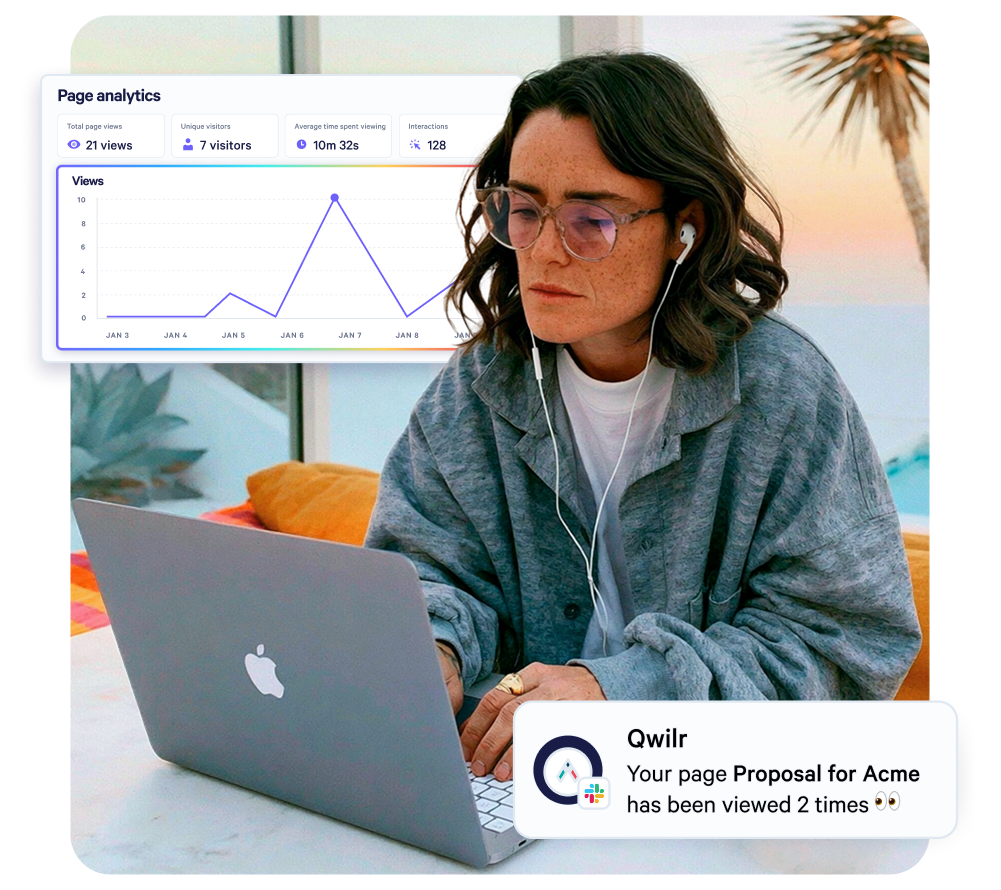
See when the proposal is opened and what the buyer spends time on. Follow up on the questions already taking shape, then collect the signature on the same page.
From first draft to signed deal
Start with what the deal needs
Open the right template and add the product, rollout plan, pricing and proof. Pull account and opportunity details from HubSpot or Salesforce instead of copying them by hand.

See where interest sits
Track who opened the proposal and which sections they returned to. If pricing, security or implementation is holding attention, the rep knows where to pick up the conversation.
Get the decision in the page
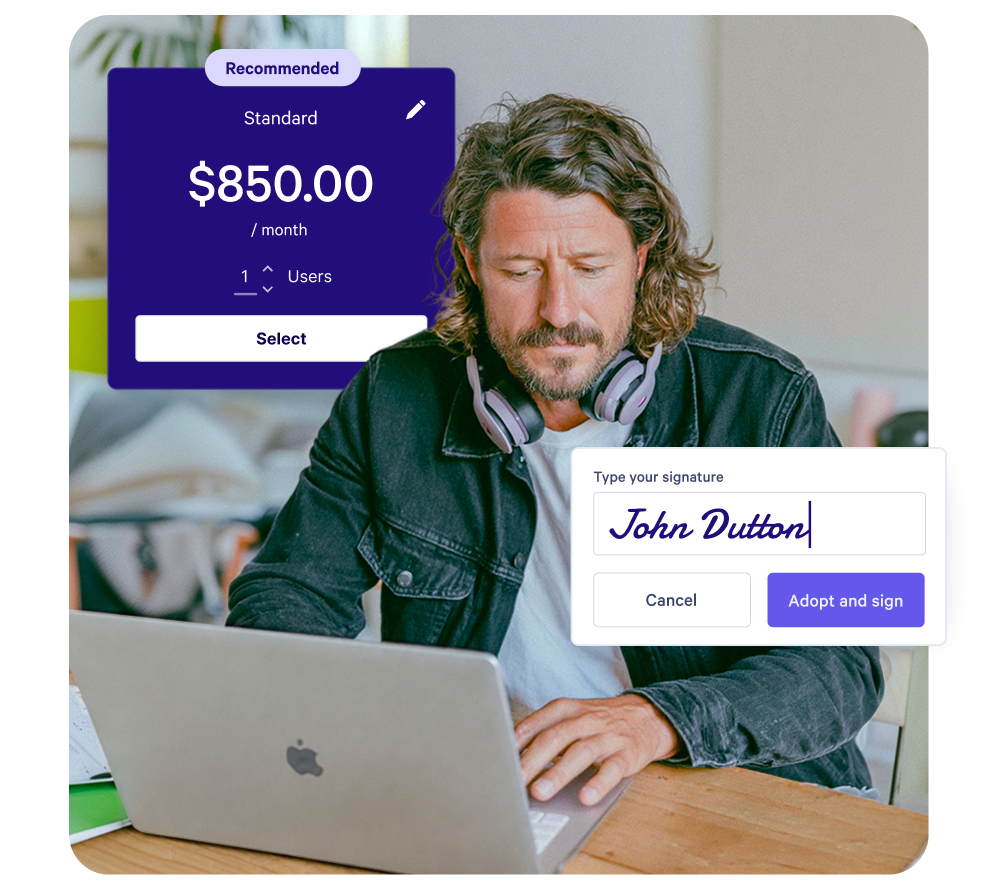
The buyer selects the right option, accepts the terms and signs. The completed proposal stays connected to the CRM for the handoff to onboarding.
A proposal an internal champion can use
Lambda sells six and seven-figure AI infrastructure deals to engineers and commercial leaders. Its Qwilr pages keep product information, pricing and proof together, so a champion can carry the deal forward inside the business.
"They have everything they need to make their pitch and don’t have to reach back out to us for more information."
Robert Brooks, Director of Sales, Lambda
Read the Lambda story
Less proposal admin as the team grows

Keep approved content close
Store product descriptions, implementation detail, security information, case studies and terms in a shared library. Update it once, then let the team use it.

Price the deal clearly
Show packages, usage tiers, implementation fees and optional services together. Buyers can compare the options and choose before they sign.

Keep the CRM in the loop
Use HubSpot or Salesforce data in the proposal and send acceptance data back. Add payments through Stripe or connect other tools through Qwilr’s API when the process calls for it.
Start from a software proposal template
Choose the closest starting point, then change the product, rollout and pricing for the deal.
Explore software templates

Frequently asked questions
Proposal software helps software development companies create, send, track and approve sales proposals from one repeatable process. It brings the product, implementation plan, pricing, terms and next step into a single buyer-facing document.
The strongest fit is a software business with several people sending proposals and a need for more control than Word files, slide decks and separate signing tools provide.
A software sales proposal should explain the buyer’s problem, the proposed product or package, pricing, implementation, responsibilities, proof and commercial terms. Technical information should be detailed enough for reviewers without burying the decision in a separate deck.
The proposal should also give the buyer a clear way to choose, approve or sign.
Software companies can keep proposals consistent by giving reps approved starting points for common products, packages and rollout paths. Shared content keeps product information, implementation detail, proof and terms current while still leaving room to tailor the deal.
Connecting the process to HubSpot or Salesforce also reduces repeated data entry and keeps proposal activity tied to the opportunity.
Yes. One software proposal can present product detail, integrations and rollout information alongside pricing, terms and expected outcomes. Technical reviewers can inspect how the solution will work while commercial stakeholders assess the cost and business case.
Keeping both views together also gives an internal champion one document to share.
Implementation and pricing should appear together so the buyer can see what each option includes and what happens after signature. A software proposal can show rollout phases, responsibilities, timing, setup fees, subscriptions and optional services in the same flow.
This makes it easier to compare packages without separating the commercial offer from the work required to deliver it.
Qwilr is a good fit when a software development company has moved beyond founder-led proposals and several people need to follow the same sales process. RevOps or Sales Ops can manage approved content while reps tailor product, pricing and implementation details for the opportunity.
Smaller teams sending occasional proposals may not need the same level of structure, controls or CRM connection.