
Video production budgets are climbing — and so are the expectations of the clients controlling them.
According to Vimeo's 2025 State of Video at Work report, 65% of organizations have increased video production over the past two years. This means more projects on the market, more agencies competing for them, and more pressure to prove strategic value before a single frame gets shot.
A strong proposal does that work upfront. It shows decision-makers not just what you'll produce, but how you'll produce it, what it costs, and why the investment holds up.
Understanding how to write sales proposals is especially critical in video production, where creative vision and commercial rigor need to coexist. This guide covers the core elements of a winning video production proposal: executive summaries, production workflows, embedded demo reels, pricing, and a reusable video production proposal template built to convert high-value prospects into long-term clients.
What is a video production proposal?
A video production proposal is a structured document that outlines a video production agency's creative approach, project scope, pricing structures, timeline, and deliverables for a specific client engagement.
It functions as both a creative brief and a commercial document and gives potential clients a clear picture of what will be produced, how the production process will be managed, and what the investment covers. Agencies and videographers submit the document before a contract is signed, and in competitive pitches, it’s the primary basis on which clients evaluate one production team against another.
Why do you need a video production proposal?
Latest research shows that 79% of organizations say video improves business outcomes, yet only 43% have a clear, organization-wide video strategy.
That gap means most clients arrive at a production engagement without aligned stakeholders, defined approval workflows, or measurable output goals. And without a proposal, those gaps surface mid-project when they're expensive to fix.
For video production agencies competing for high-budget work, a production proposal also serves a commercial function. It signals that a team has the skills and expertise to manage complexity, communicate clearly with non-creative stakeholders, and deliver against business objectives. A professional video proposal is often what separates a shortlisted agency from one that gets passed over before the pitch meeting.
7 elements to include in a video proposal
A well-structured video production proposal supports multithreading sales by giving every stakeholder on the buying committee the information they need to evaluate the project and move it through internal approval.
The following elements cover what a high-converting proposal needs to include and why each one matters to the people signing off on the budget. Missing a critical section or burying it creates friction that slows decisions and invites competitors to fill the gap.
Executive summary
An executive summary is a concise overview of the entire proposal, written so a decision-maker can assess fit without reading every page. It includes:
- The project objective
- Creative approach
- Timeline
- Total investment
For video production proposals, this section carries extra weight. Creative projects involve subjective judgment, and budget holders need a clear, structured snapshot that frames the video production services as a business investment with defined outcomes.
A compelling executive summary connects the production concept directly to the client's marketing objective — whether that's a product launch, brand campaign, or internal communications rollout — and showcases the team's ability to deliver against it.
Writing it last ensures every detail matches the full proposal, making the executive summary the final thing you create, but the first thing a potential client reads.
Project scope and deliverables
Scope defines what the production team will deliver and what falls outside the agreement, while deliverables define the specific assets the client receives at each stage of the project.
Both need to be explicit. Video production projects carry a high risk of scope creep, where an extra interview subject, a last-minute location change, or additional revision rounds can push timelines and budgets past the original agreement. Defining boundaries upfront protects both sides.
A detailed scope section typically covers:
- Number and type of video assets (hero video, cutdowns, social edits)
- Production format and specifications (resolution, aspect ratios, duration)
- Locations, talent, and crew requirements — including whether a videographer or full crew is needed
- Music licensing and sound design parameters
- Revision rounds included before additional fees apply
Map deliverables to defined milestones — concept approval, rough cut delivery, final master delivery — so the potential client knows what to expect and when. The more precisely these are documented in the video production proposal, the less room there is for misalignment once production begins.
Production workflow and timeline
A production workflow breaks the project into distinct phases with milestones, deliverables, and deadlines attached to each. Clients need this to coordinate internal resources, schedule reviews, and plan around launch dates.
Video projects depend heavily on client input at specific moments. For example, a delayed brief approval pushes back the shoot date. Dependency mapping — flagging where the client's team needs to deliver input or sign off — keeps both sides accountable and prevents bottlenecks from cascading through the schedule.
A standard video production process and timeline includes:
- Pre-production: Creative brief finalization, scriptwriting, storyboarding, location scouting, casting, and crew scheduling
- Production: Shoot days, on-set direction, and raw footage capture
- Post-production: Rough cut assembly, high-quality editing, color grading, sound design, motion graphics, revision rounds, and final delivery
Two things strengthen a timeline's credibility: realistic time estimates for each phase based on the project's actual complexity, and alignment with the client's own deadlines. Mapping delivery phases to a known launch date or campaign window gives internal approvers a concrete reason to keep the video project moving forward.
Team and credentials
Video production is a collaborative process, and clients want to know who is directing, shooting, editing, and managing the project before they commit.
A strong team section covers:
- Key personnel and their roles on the video project — director, producer, director of photography, videographer, editor
- Relevant expertise and notable past projects that showcase the team's skills
- Any specialized skills that match the project's requirements — such as aerial cinematography, animation, or multilingual production
Keep bios focused on credentials directly relevant to the proposed work. If the production involves subcontractors or freelance specialists, naming them and their qualifications builds customer trust and confidence that the team has the professional depth to deliver.
Portfolio and demo reels
The portfolio section is where a video production proposal stops reading like a business document and starts showing what the team can do. Work samples give clients a direct reference point for production quality, creative style, and technical capability.
Include:
- A curated demo reel or sizzle reel that reflects the creative standard the potential client can expect and showcases the team's best work across relevant video services
- Two to three case study examples with brief context on the objective, approach, and outcome, including images and links to finished pieces where available
- Links to full-length finished pieces where the client can assess pacing, storytelling, and production value
Static PDF proposals limit how portfolio content is presented — embedded links break, file sizes balloon, and the customer experience feels disconnected from the work itself. Interactive sales tools like Qwilr let production agencies upload and embed video directly.
That level of sales engagement keeps clients inside the proposal rather than redirecting them to an external platform where attention is harder to hold.
Pricing and payment terms
Pricing hesitation stalls video production deals more than almost any other factor. Wistia’s 2025 State of Video report shows that 38% of companies cite cost as a major barrier to producing more video.
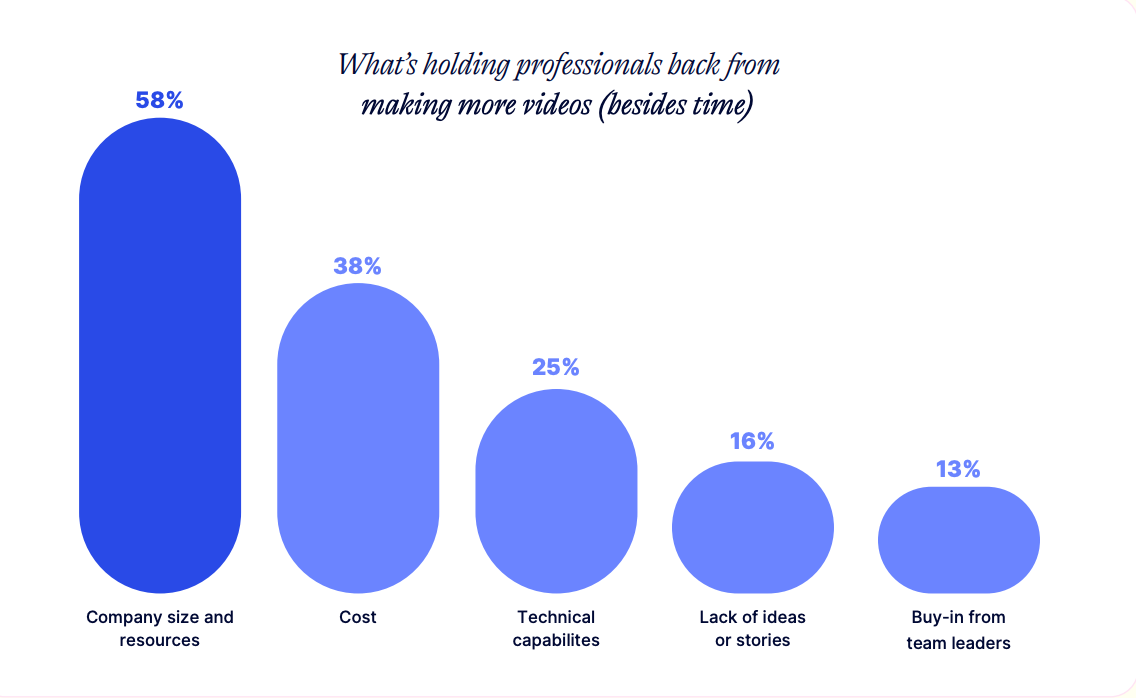
A proposal that presents a single lump sum without context is one of the most common sales mistakes. It reinforces that hesitation and gives finance teams a reason to delay approval.
Transparent pricing, including what's included, what's optional, and what could affect the final figure, reduces the risk of sticker shock. It also gives buyers sales confidence to present the video production services proposal as a clear business investment rather than a line-item negotiation.
Map line items directly to project phases and deliverables:
- Pre-production: Scripting, storyboarding, location scouting, casting, and project management
- Production: Crew, equipment, talent, location fees, and shoot-day logistics
- Post-production: High-quality editing, color grading, sound design, motion graphics, music licensing, and revision rounds
- Additional variables: Travel costs, expedited delivery fees, additional deliverable formats, or extended licensing
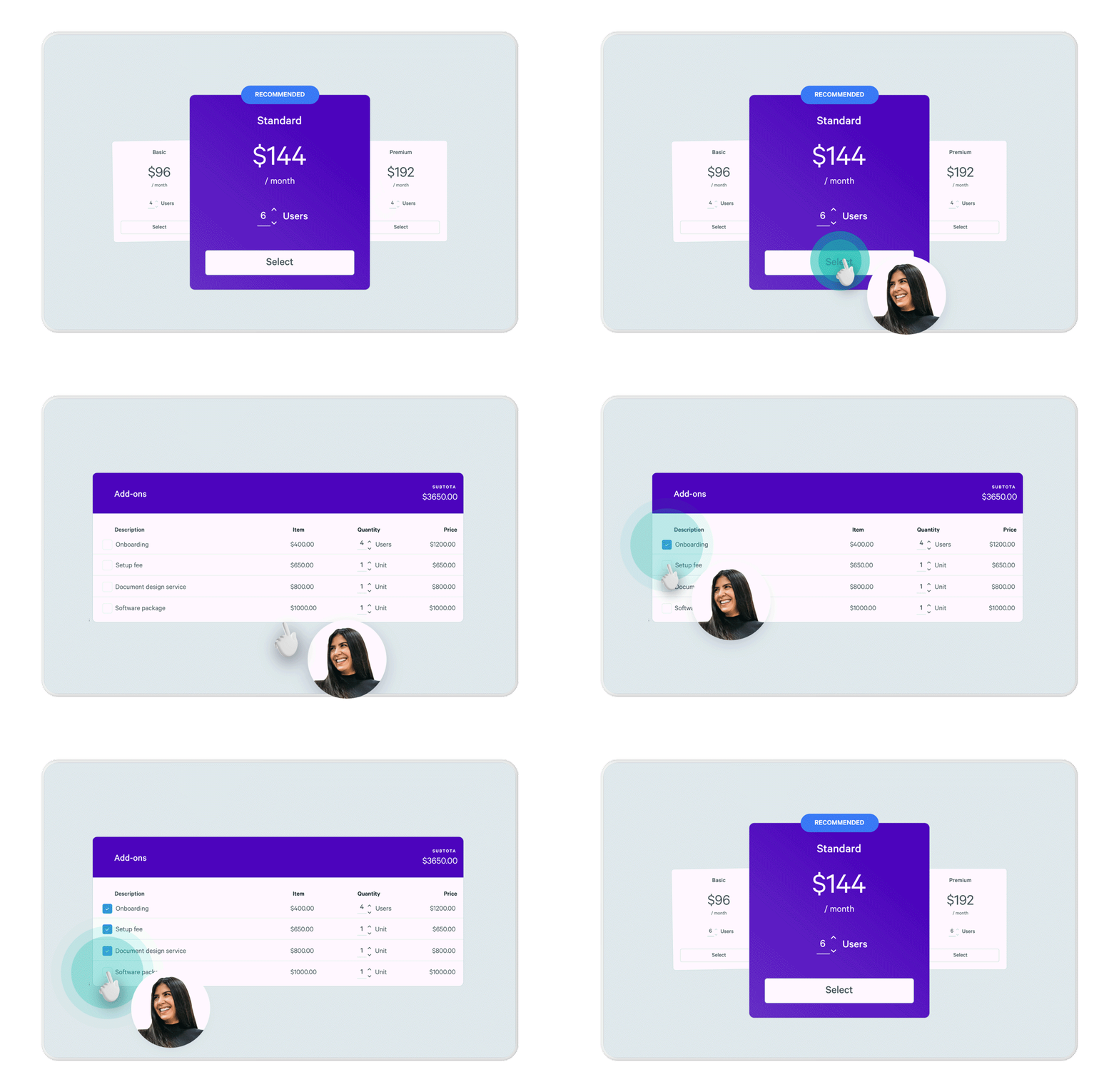
Include a word or two of rationale on each line item so finance and procurement teams can evaluate the budget without needing a separate conversation. Where pricing includes configurable elements, such as adding social cutdowns or upgrading to broadcast licensing, interactive quote blocks let potential clients adjust scope and see cost implications in real time.
Qwilr's interactive pricing tables give clients the ability to add or remove video services like social cutdowns or extended licensing and see the total update instantly.
Fewer back-and-forth emails means higher sales velocity.
Terms and sign off
A proposal without clear terms and a defined next step leaves the decision entirely in the client's hands. The terms section covers the commercial and legal details that clients and their procurement teams need to evaluate before signing:
- Payment schedule and milestone-based billing terms
- Intellectual property ownership and usage rights for finished assets
- Raw footage and asset ownership or licensing arrangements
- Cancellation and termination policies
- Revision limits and additional revision fees
- Confidentiality and non-disclosure obligations
Usage rights deserve particular attention in video production proposals. Clients need to know where they can distribute the final assets — social media, broadcast, paid media, internal use — and for how long.
Finally, create a singular and direct call to action. One clear next step, such as signing the proposal, booking a kickoff call, or approving a deposit, keeps momentum moving. Multiple options create decision fatigue and slow the deal down.
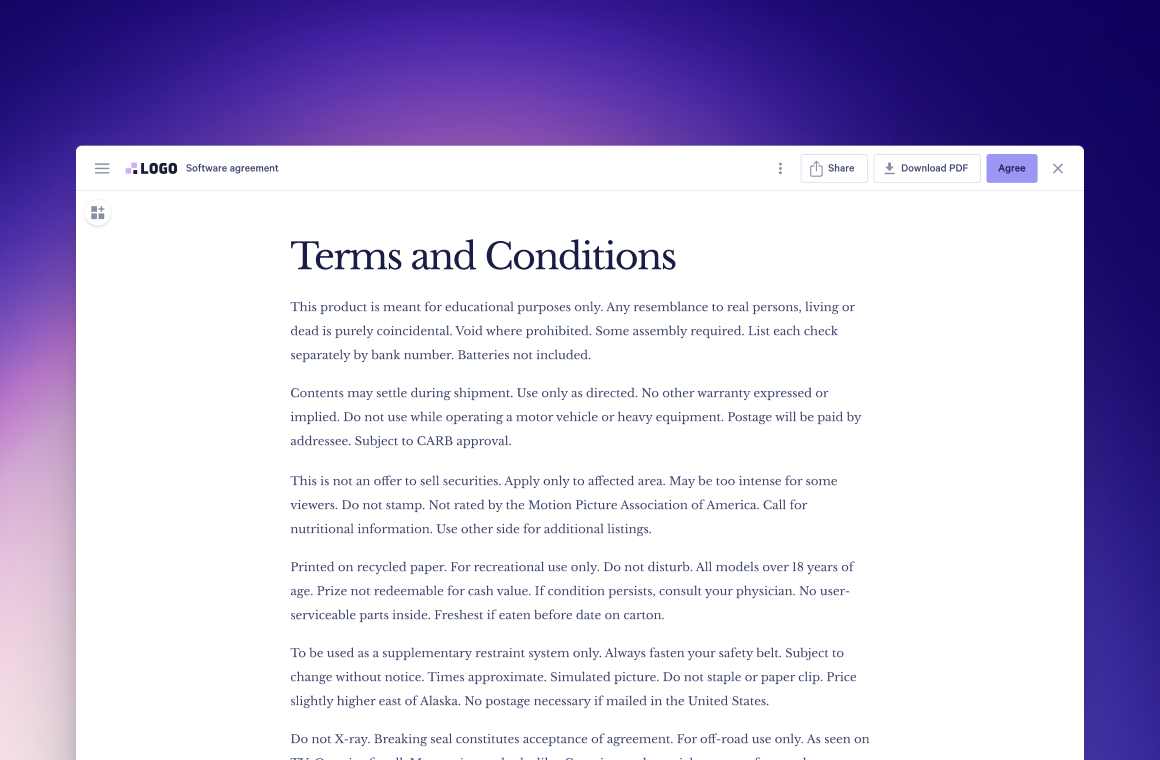
Qwilr embeds e-signature and payments directly into the proposal through QwilrPay.
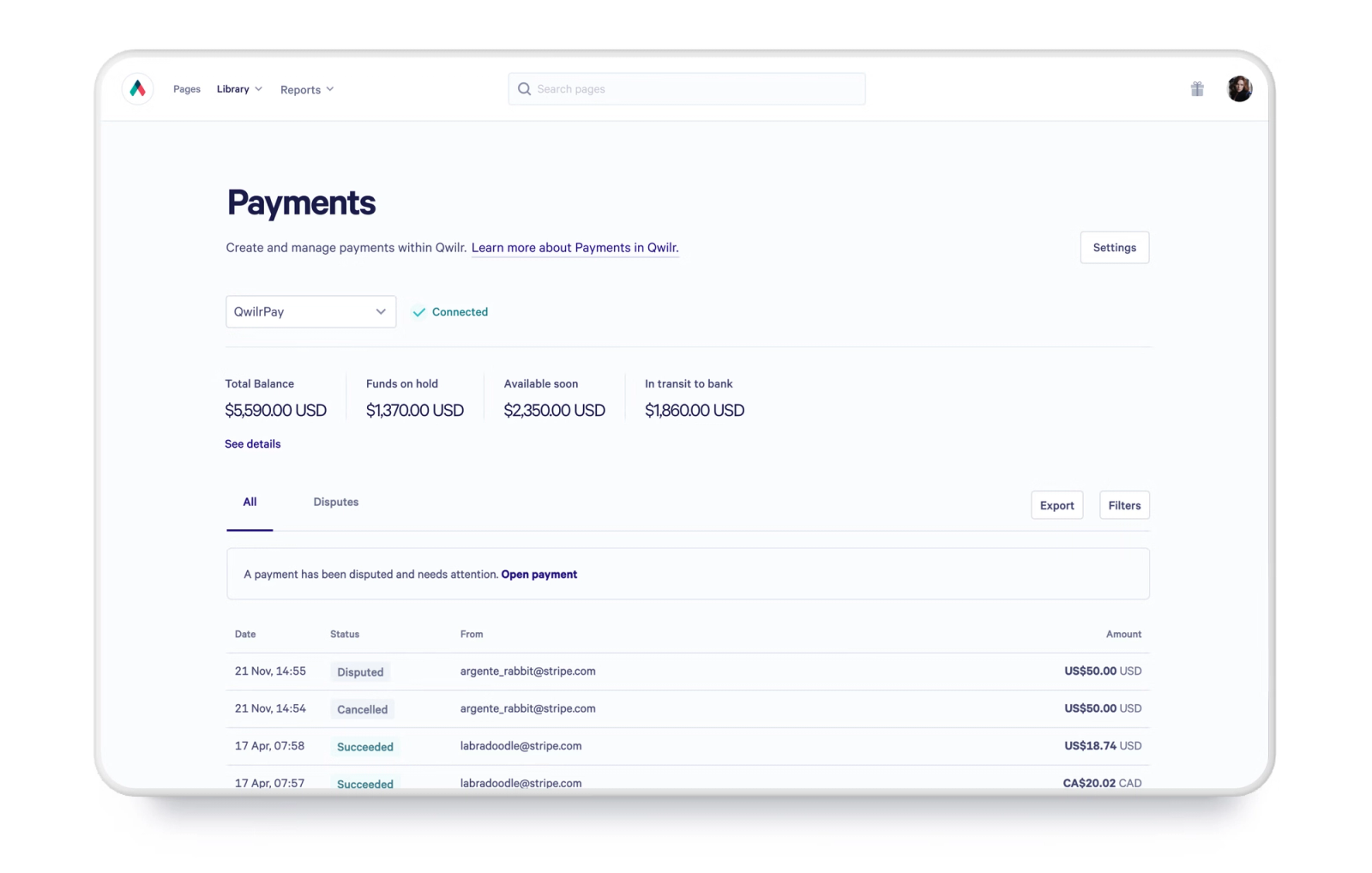
Get a focused dashboard to track payment status across deals, flexible rules to control when and how clients pay, and a seamless, professional purchase experience from acceptance to payment.
Tips to make your video production proposal stand out
The elements covered above give clients the information they need to evaluate the project, but evaluation and approval are two different things. Clients evaluating multiple videographers and video production agencies simultaneously need a reason to move forward with one over the rest.
These tips cover how to build that edge into the video proposal itself and how to present the team's expertise and value in a way that makes them the best choice before the pitch meeting.
Set creative control expectations in the proposal
Revision conflicts erode margins and timelines on a video production project. When creative control expectations are left to verbal agreements or assumed, disagreements surface mid-production when they're expensive to resolve.
Ali Malik, Founder and CEO at Bezier Labs, builds explicit review timelines into every proposal:
"We require content review and approval within 48 hours so we can hit our deadlines. That way, it doesn't seem like the agency was the bottleneck if the client ever drops the ball."
Peter Murphy Lewis, creator of People Worth Caring About (streaming on Apple TV, Hulu, Amazon, and Roku) and Fractional CMO, dedicates an entire section of his proposals to his creative philosophy. As Lewis puts it,
"My proposals include a 'progression over perfection' philosophy section. Clients know upfront that revisions are limited to factual corrections, not creative edits, and timelines are built around worker availability, not client preferences."
Both approaches achieve the same outcome: the proposal itself becomes a sales engagement tool and the agreement on how creative decisions get made, laid out in plain language before production begins.
Scope derivative assets from day one
A single video production can generate dozens of usable assets, but only if those deliverables are scoped before the cameras roll. Social cutdowns, internal training clips, event reels, podcast audio versions, and conference presentations all extend the life and reach of a hero video, yet production teams often leave these out of the initial proposal and pitch them as add-ons later.
Research shows that 73% of organizations expect video production to continue increasing over the next three years, and repurposing content remains one of the top challenges teams face. Clients are under pressure to do more with every production budget.
Lewis structures his proposals around this principle. "Deliverables are presented as ecosystem components, not isolated videos," Lewis explains. "Streaming episodes, 60-second social clips, 3-minute conference reels, full transcripts for accessibility, podcast audio versions." A single documentary season generates 50+ derivative assets across platforms.
Proposals that scope derivative video content upfront give potential clients a clearer picture of total ROI.
Use the mapper below to see every derivative asset your hero video could generate and which ones belong in the proposal from day one.
Create a custom sample before pitching the full production
Clients evaluating multiple production teams are trying to picture how the finished content will look on their own channels. A portfolio of past work answers whether the team can produce at a high level, but a custom sample built around the client's brand, tone, and audience answers whether they're the right team for this specific project.
This approach works best for high-value contracts where the upfront investment is small relative to the deal size. Reserve this tactic for competitive pitches where the contract value justifies the production cost, since it's a powerful way to showcase expertise and demonstrate that the team has already invested in understanding the client's brand, target audience, and video content goals.
Malik at Bezier Labs invests in this approach selectively: "We recently spent $200 creating two tailored videos to include in an upsell proposal for a client that landed us a contract that was roughly 10x the value per month." A well-executed custom example is often the best choice for high-stakes pitches where the competition is strong, and differentiation is hard to achieve through a standard portfolio alone.
Video production proposal template
Qwilr's video production proposal template is built around the structure covered in this guide. Every element is customizable — video production agencies can tailor branding, logo placement, color scheme, fonts, and section order to match a specific client or video project. The mobile-responsive design adapts to whatever device the potential client uses to review the proposal.
The proposal template includes sections for:
- Executive summary
- About us, including company background and team credentials to showcase expertise
- Video production process and workflow
- Demo reel embedded directly, so clients don't need to follow external links
- Portfolio and case study examples with images and context
- Pricing, including interactive tables that let clients explore video services and adjust scope
- Payment terms and payment schedule
- E-signature and sign off
- Terms and conditions
Qwilr's AI proposal generator can also build a custom proposal from scratch in minutes.
It’s the ideal solution for agencies that need a professional first draft fast, without sacrificing the structure and detail that move potential clients toward a decision.
Write a video production proposal that clients approve faster
Video production teams manage tight shoot schedules, sensitive equipment, variable locations, and client revisions. All while competing for projects against agencies with comparable reels and lower rates.
A proposal that clearly documents a creative approach, production process, and pricing gives clients the information they need to make a decision. It also gives production teams a repeatable system that doesn't require rebuilding from scratch on every pitch.
Qwilr's video production proposal template covers every element in this guide so production teams can tailor and send a professional proposal without the administrative overhead.
That’s a wrap!
Long shifts, delicate equipment, inconsistent weather, and lighting conditions…videographers face more challenges than most on the average working day.
For busy creatives, any new tool or process you add to your workload has to be sturdy enough to rely on and user-friendly enough to increase your productivity straight away.
Fortunately, Qwilr’s proposal software meets both these criteria. Our templates, designs, and editor, combined with your professional video content, are going to allow you to streamline your onboarding process and create jaw-dropping proposals you can instantly tailor for each client.
Check out our video production proposal template to get a better idea of what your customers could come to expect from you.
About the author

Kiran Shahid|Content Marketing Strategist
Kiran is a content marketing strategist with over nine years of experience creating research-driven content for B2B SaaS companies like HubSpot, Sprout Social, and Zapier. Her expertise in SEO, in-depth research, and data analysis allow her to create thought leadership for topics like AI, sales, productivity, content marketing, and ecommerce. When not writing, you can find her trying new foods and booking her next travel adventure."
Frequently asked questions
A video production proposal should open with a clear project summary. This should be followed with sections that outline why your production company is suited to the project, along with a breakdown of the production process, demo reel and portfolio, and pricing (in that order).
Your proposal’s T&Cs should include payment and deposit terms (including overtime fees), cancellation policies, work product ownership, and an exact description of services.
You should try to avoid making the following mistakes with your sales proposal:
- Lack of understanding of the client’s requirements
- Lack of understanding of the client’s industry
- Generic content that’s obviously copied and pasted in.
- Boring or unprofessional design
- Lack of interactive elements and functionality, such as e-signature.