Finding the right partner is the easy part. The harder part is sending a proposal that makes the business case for a strategic partnership clearly enough that they say yes without weeks of back-and-forth to fill in gaps you should have addressed upfront.
Poorly structured proposals create confusion around roles, financials, and expectations. That confusion delays decisions and gives the other party reason to deprioritize the conversation. A well-built partnership proposal eliminates most of those friction points before they surface and lays the foundation for a successful business partnership.
This guide covers the types of partnership proposals, the core components every strong proposal includes, legal considerations to address early, and practical tips for making the business case clear. There's also a customizable template that cuts hours off the drafting process.
Key takeaways
- A partnership proposal is a document that outlines a potential collaboration between two parties, detailing objectives, benefits, responsibilities, and the terms of the partnership.
- There are various types of partnership proposals, including joint partnership proposals, sales partnership proposals, marketing partnership proposals, and sponsorship proposals.
- A strong partnership proposal provides strategic direction, sets clear expectations, manages risk and aligns resources, establishes measurable success, and builds trust through professionalism.
- Qwilr's business partnership proposal template can be used to create a professional and compelling proposal.
What is a partnership proposal?
A partnership proposal is a formal document outlining a proposed business partnership or joint venture between two companies, including shared objectives, roles, responsibilities, financial services, and success metrics. It’s typically an intermediate step between informal verbal discussions and formal contracts.
Unlike a casual pitch or introductory email, a partnership proposal covers the full scope of the collaboration, like resource commitments, revenue sharing, intellectual property rights, and measurable KPIs.
It’s especially critical given that 41.4% of partnership leaders say leadership doesn’t factor partnership metrics into strategic decisions, and 20.7% say success isn’t clearly defined. A proposal that makes KPIs explicit helps eliminate this visibility gap.
Types of business partnership proposals
Partnership proposals vary depending on the nature of the collaboration, the legal structure involved, and what each party is trying to achieve. Before drafting a proposal, research the four legal structures that underpin most partnerships in various industries.
Each structure carries different implications for liability, decision-making, and resource contribution, and those implications shape how the proposal is framed.
Joint partnership proposal
A joint partnership proposal outlines how two companies combine technical, financial, or operational capabilities to co-develop a product or service. It details shared development resources, revenue splits, IP ownership, and go-to-market responsibilities.
It's common across industries — for example, a SaaS vendor and a cybersecurity firm co-building a secure cloud platform, or a hardware manufacturer partnering with a software company to deliver an integrated solution. Because both organizations are contributing toward a shared outcome, the proposal needs to be explicit about decision-making authority, cost allocation, and what happens if either entity exits the arrangement.
Marketing partnership proposal
A marketing partnership proposal outlines how two complementary brands collaborate on joint campaigns, content, or audience development initiatives. It specifies cross-promotion activities, content creation responsibilities, audience reach commitments, and shared success metrics like lead generation targets or engagement benchmarks.
Common formats include co-marketing campaigns and other initiatives:
- Co-branded content campaigns: Both companies co-author content like blog posts, whitepapers, or video series and distribute it to their respective target audiences.
- Influencer partnerships: A brand partners with a content creator to produce sponsored content tied to specific engagement or conversion benchmarks.
- Event sponsorships: One brand funds or co-hosts an event in exchange for audience access, logo placement, and lead generation opportunities.
Define each party's creative responsibilities, approval processes, and which team owns performance reporting — including how results get communicated and at what cadence.
Sponsorship proposal
A sponsorship proposal structures one party's financial or material support of another's event, content series, or initiative in exchange for defined visibility and access. It details deliverables like:
- Logo placement
- Speaking slots
- Booth space
- Lead generation opportunities
- Audience reach data
For example, a B2B software company sponsoring an industry conference would expect the proposal to specify exactly where their brand appears, how many attendees they can reach, and what measurable outcomes justify the investment. A strong sponsorship proposal ties each deliverable to a tangible business outcome that the sponsoring entity can present to its leadership team.
Sales partnership proposal
A sales partnership proposal maps out how two companies collaborate to drive revenue growth through shared selling efforts. It defines commission structures, sales targets, lead sharing agreements, territory boundaries, and training support responsibilities.
Common formats include reseller agreements, referral partnerships, and co-selling arrangements. Strong sales partnership proposals leave less room for misalignment once selling begins — mainly around lead ownership, compensation triggers, and what qualifies as a closed project or deal.
Benefits of a strong partnership proposal
The quality of a partnership proposal directly influences how smoothly the collaboration runs once it begins. A vague or incomplete proposal forces both parties to make assumptions — and those assumptions tend to surface as disputes over roles, resources, and expectations. Here's what a strong partnership proposal delivers for both parties.
- Strategic direction: A well-built proposal creates a shared foundation and roadmap that both parties can reference when priorities shift or decisions need to be made during planning. It keeps the partnership oriented toward mutual goals rather than individual interests.
- Clear expectations: Explicitly defining roles, deliverables, and timelines removes ambiguity before it becomes a problem. Both teams know exactly what they're accountable for and when.
- Risk management: A strong proposal addresses resource commitments, liability, and exit terms before either party is financially or operationally exposed, streamlining the negotiation process significantly. Resolving these details on paper is significantly easier than resolving them mid-partnership.
- Measurable success: Defined KPIs and milestones give both parties an objective basis for evaluating performance at regular intervals. Teams can identify what's working, what needs adjustment, and whether the partnership warrants renewal or expansion.
- Legal protection: A formal proposal creates a documented record of agreed terms — including intellectual property rights — that protects both parties if expectations are later disputed. It also gives legal and procurement management teams at both organizations something concrete to review before committing resources.
- Stakeholder buy-in: In organizations where multiple decision-makers need to approve a partnership, a well-structured proposal gives internal champions something concrete to present. It helps develop momentum internally so the collaboration can move forward without unnecessary delay.
- Credibility: A thorough, well-structured proposal signals that your organization operates with the same rigor you're asking of your partner. That first impression carries weight in how seriously the other party takes the collaboration.
What to include in your proposal
A partnership proposal needs to cover enough ground that both parties can make an informed decision and describe key elements clearly without burying the most important details in dense, unstructured text. These are the core components every strong proposal should include.
Executive summary
The executive summary gives decision-makers a complete picture of the opportunity in under 200 words, and is one of the key sections most decision-makers read first — and sometimes only. It should cover the market opportunity, the value proposition, projected revenue share or cost savings, and a 90-day implementation planning timeline.
Most decision-makers read this section first, so it needs to deliver the most compelling elements of the proposal without requiring the reader to dig further to understand the value.
Business introduction
The business introduction establishes credibility with evidence relevant to this specific partnership. Rather than listing generic company facts, focus on growth metrics, market share, customer success outcomes, and industry recognition that speak directly to what this partner cares about. The goal is to give the prospective partner confidence that your organization has the track record and expertise to deliver on what the proposal promises.
Background and objectives
The background and objectives section introduces both businesses, explains the strategic rationale behind the partnership, and states the specific, measurable goals both parties are working toward.
Rather than summarizing each company's general history, focus on the context that makes this particular collaboration logical — shared markets, complementary capabilities, or a gap neither organization can close independently.
Pair that context with concrete objectives: revenue targets, customer acquisition goals, or market expansion plans with defined timelines. Decision-makers need to understand why the partnership makes strategic sense to pursue it now.
Scope of work
The scope of work defines exactly how the partnership will operate day to day. Cover project phases, key deliverables, resource commitments, decision-making processes, and risk management responsibilities. Also, outline key dates, including project start, end, and major deliverables.
A well-constructed scope gives both organizations a shared operational blueprint and reduces the likelihood of disputes over workload, timelines, or services once execution begins.
Success metrics
The success metrics section establishes how both parties will evaluate performance throughout the partnership. Define KPIs across revenue, customer satisfaction, market share, and operational efficiency, and specify who owns reporting and at what cadence. Without agreed metrics, assessing whether the partnership is delivering value becomes subjective, which makes renewal or expansion decisions significantly harder to justify.
Legal considerations
The legal considerations section addresses terms both parties need to agree on before work begins and covers:
- Intellectual property rights
- Confidentiality requirements
- Liability provisions
- Compliance obligations
- Terms, termination, and risk management
Lastly, include a termination clause or "buy-sell" agreement that outlines how a partner can leave or how the partnership dissolves if goals aren't met. Addressing these terms in the proposal gives both parties the opportunity to surface deal-breakers early, before either side has committed significant time or resources, and is one of the key elements of any well-structured proposal.
Tips for writing a compelling partnership proposal
The best proposals go beyond basic business benefits to show a deep understanding of your potential partner's needs and market challenges. Let's break down how to create a compelling proposal that gets partners excited about working with you.
Research your potential partner before you start writing
Thorough research shows genuine interest in the potential partner and makes it significantly easier to frame the proposal around their specific priorities. Before drafting, review their recent product launches, earnings calls, hiring trends, and public statements from leadership. Look at their current market position, competitive pressures, and any other initiatives they've announced.
Customized proposals show a visible effort to decision-makers, evaluating whether your organization is the right fit. The more specifically the proposal reflects the partner's current situation, the less work they have to do to see the value.
Lead with the partner's business goals
Decision-makers evaluate a partnership proposal through one lens: what it delivers for their organization. Don't make the proposal overly promotional, instead focus on a mutually beneficial business relationship.
Sydney Cheyenne Youngblood, ex-Senior Account Executive at Qwilr, puts it simply:
"Less on 'us' and more on them — lead with their needs so it immediately resonates, and if anyone else gets involved, they can understand the proposition quickly without you in the room."
This aligns with how partnerships are evaluated today — 64.5% of companies tie partnership KPIs directly to executive-level OKRs, so a proposal that maps services and activities to strategic metrics makes internal buy-in significantly easier.
Quantify the value proposition with specific numbers
Specific numbers give decision-makers something concrete to evaluate and present internally, and strengthen your value proposition at every stage of the review process.. Proposals that earn four or more minutes of review time close at 41% — those that get under a minute close at just 3.5%. Specific numbers give decision-makers a reason to stay engaged long enough to build an internal case.
Where historical data exists, include it with attribution. Where it doesn't, use the prospective partner's publicly available metrics to build a credible projection.
Qwilr's built-in ROI calculator lets partners input their own numbers directly inside the proposal.
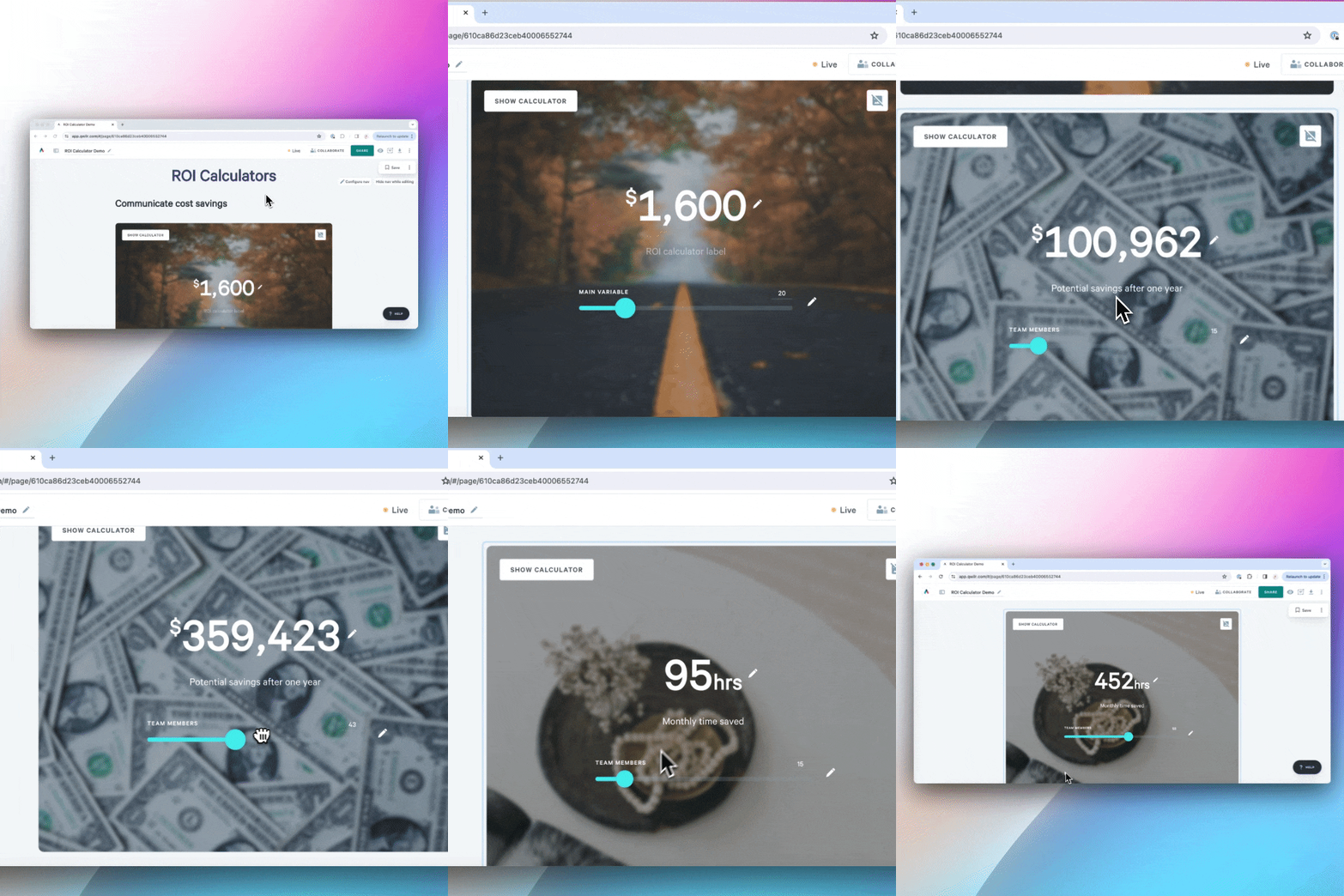
Potential partners can then generate a personalized return projection they can take directly to their leadership team for sign-off.
Make it easy for partners to sign and move forward
The final step in any partnership proposal is getting both parties to formally commit. A signing process that requires downloading files, switching tools, or managing email threads adds unnecessary steps that delay execution.
Qwilr’s proposal management software comes with e-signature functionality that lets both parties review partnership details and sign directly inside the proposal to streamline the entire process.

Plus, analysis of over a million proposals found that interactive elements increase acceptance rates by up to 200%, with interactive content blocks specifically driving a 103% higher acceptance rate compared to static documents.
Keeping the entire process in one place — review, interaction, and signature — removes the steps that slow decisions down and helps build a strong foundation for future collaboration.
Define who owns what before the proposal is signed
When roles and responsibilities aren't explicitly assigned upfront, both parties operate from their own assumptions about who is handling what.
The proposal should clearly attribute ownership across key areas: who manages day-to-day communication, who controls shared assets, who holds final approval on project deliverables, and who is accountable for hitting each KPI. Documenting this before signing gives both teams a reference point throughout the partnership and reduces the likelihood of disputes over accountability later.
Address legal and risk considerations early
Legal and risk terms are easier to negotiate before either party has committed time and resources to the collaboration. Raising them late in the process — after both sides are already aligned on strategy and excited about the opportunity — creates friction that can delay or derail an otherwise strong agreement.
Cover intellectual property rights, confidentiality requirements, liability provisions, and termination conditions in the proposal itself. Flagging these terms early gives both parties the opportunity to identify deal-breakers before they've invested significant effort, and shows that your organization approaches partnerships with operational seriousness.
Keep the scope of work concrete and time-bound
A scope of work that lacks specificity creates problems once execution begins. When deliverables are vague or timelines are absent, both parties default to their own assumptions.
Since 28% of companies are still running partnerships on patchwork spreadsheets, vague scope language compounds management inefficiencies. Specific, time-bound scopes streamline execution and prevent scope creep once work begins.
Define each phase of the partnership with:
- Clear deliverables
- Assigned responsibilities
- Realistic deadlines
Include decision-making checkpoints so both organizations know when to meet to review progress and adjust course. A well-defined scope also makes it easier to identify scope creep early — when one party begins taking on work that wasn't part of the original agreement — before it affects the partnership's resources or timelines.
Use a business partnership proposal template
Starting a partnership proposal from scratch for every new opportunity is time-consuming and inconsistent. A business partnership proposal template standardizes the structure, ensures no critical components are missed, and cuts the time it takes to get a compelling partnership proposal in front of a potential partner.
Qwilr's partnership proposal template includes pre-built key sections for the executive summary, market opportunity, joint objectives, scope of work, success metrics, and next steps. Each section is fully customizable, so the proposal reflects the specific partnership details and priorities of each joint venture. Teams can also embed high-quality visuals like charts, graphs, and images to help convey key points better.
Saved blocks let teams reuse frequently used content — pricing terms, company credentials, or legal boilerplate — across multiple proposals without rewriting the same material each time.
Partnership teams can improve the drafting process and streamline proposal management across the business.
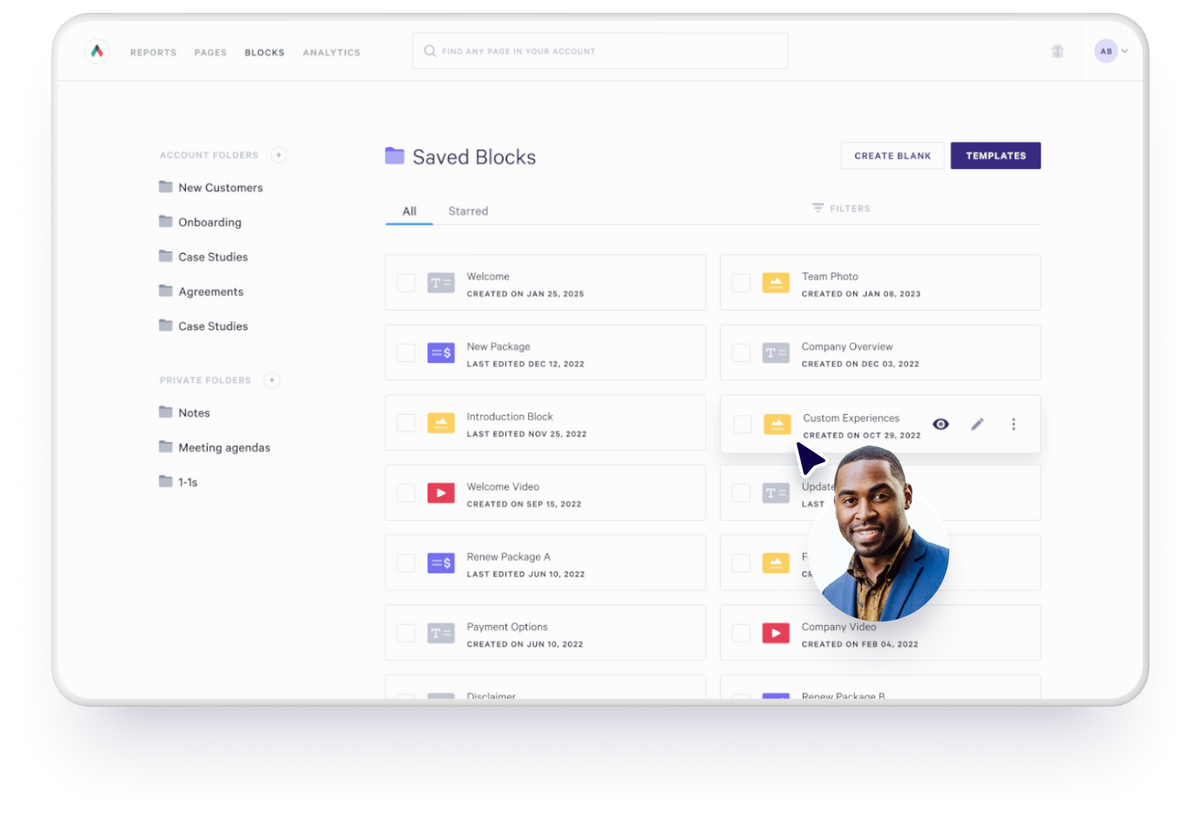
Build and manage every partnership proposal in one place with Qwilr
A partnership proposal needs to cover shared objectives, defined roles, financial terms, legal considerations, and success metrics. Proposals fall short not because the opportunity is weak, but because the document leaves too many questions unanswered. Decision-makers deprioritize proposals that require follow-up to understand basic terms, timelines, or expected returns.
Qwilr's business partnership proposal template covers every core component out of the box, while saved blocks let organizations reuse credentials, legal boilerplate, and pricing terms across multiple proposals.
It also gives teams a centralized platform where every proposal lives in one place. Instead of hunting through email threads for the latest version or manually tracking who’s opened what, teams manage the entire proposal pipeline from a single dashboard, with the interest and engagement data needed to follow up at the right moment. Sign up for a free trial today.
About the author

Kiran Shahid|Content Marketing Strategist
Kiran is a content marketing strategist with over nine years of experience creating research-driven content for B2B SaaS companies like HubSpot, Sprout Social, and Zapier. Her expertise in SEO, in-depth research, and data analysis allow her to create thought leadership for topics like AI, sales, productivity, content marketing, and ecommerce. When not writing, you can find her trying new foods and booking her next travel adventure."
Frequently asked questions
Most partnership proposals run between four and seven pages for B2B collaborations involving multiple services or project phases. Simpler arrangements can cover the essentials in 2 to 3 pages with a supporting term sheet. The complexity of the partnership should determine the length — every section needs to serve a decision-making purpose, not add volume.
A partnership proposal outlines the opportunity and makes the case for collaboration — it's a persuasive document designed to get both parties aligned. A partnership agreement is a legally binding contract that follows once both parties decide to move forward. The proposal informs the agreement but carries no legal weight on its own.
A strong partnership proposal covers an executive summary, business introduction, market opportunity, joint objectives, partner overview, scope of work, success metrics, and legal considerations. These key elements give both parties everything they need to evaluate the opportunity, get on the same page, and agree on terms.