
Brand partnerships sound strategic in the pitch meeting. Getting two organizations to agree on shared KPIs, split deliverables, and a joint timeline is a different problem entirely.
The investment case is clear — Forrester's Partner Ecosystem Marketing Survey found 67% of B2B partner ecosystem marketing decision-makers expect partner-transacted revenue to grow significantly year over year. The gap between strategic alignment and a signed agreement is the proposal document.
Two brands with different approval chains, definitions of success, and reporting structures need a single brand collaboration proposal that satisfies both sides. Without it, the partnership stalls in legal, loses executive sponsorship, or launches without performance benchmarks.
This guide breaks down how to build a well-structured brand collaboration proposal — and includes a brand collaboration proposal template that covers every section both teams need to review, negotiate, and sign.
What is a brand collaboration proposal?
A brand collaboration proposal is a formal document that outlines how two or more organizations will work together on a joint initiative. It covers shared objectives, target audiences, specific deliverables, timelines, budget allocation, and success metrics.
Marketing leaders and partnership teams use brand collaboration proposals to formalize co-marketing agreements, define each partner's contributions, and establish KPIs that both organizations can report against internally.
Brand collaborations take different forms depending on the strategic objective:
- Co-branded content partnerships: Two organizations co-produce research, webinars, or content series — similar in structure to a marketing proposal but with shared ownership of deliverables and distribution. Like HubSpot and Chatfuel co-creating an ebook on chatbot strategy and sharing the leads generated from it
- Product integrations: Two platforms build a joint integration and co-market it to their overlapping user bases, like Slack and Salesforce, aligning their products and go-to-market around shared enterprise buyers
- Co-marketed campaigns: Both brands invest in a joint campaign tied to a shared audience moment, like Starbucks and Spotify sharing technology, marketing, and loyalty systems to reach overlapping customer segments
- Event partnerships: One brand sponsors or co-hosts an event with another to access a concentrated audience — common in B2B, where B2B influencers rank speaking at in-person events and co-creating content as their top planned collaborations
A brand collaboration proposal is not a sponsorship proposal, where one party funds another in exchange for visibility. It defines a reciprocal relationship where both organizations contribute resources, share audiences, and measure outcomes against jointly owned goals.
How to write a brand collaboration proposal
A strong brand collaboration proposal follows a clear sequence — from shared objectives through to measurement. Each section builds the case that stakeholders on both sides need to approve the opportunity without follow-up conversations.
The following eight steps cover what to include, how to structure it, and where proposals typically stall.
1. Define shared objectives and success metrics
Shared objectives answer one question before any creative work begins: what does success look like for both organizations?
Without alignment here, each team optimizes for different outcomes — one brand measures the partnership on a boost in sales and lead generation, while the other tracks an increase in brand awareness — and neither team can build an internal case for renewal.
Strong shared objectives are specific, time-bound, and tied to metrics both organizations already track. Common examples include:
- Joint pipeline generated from co-marketed campaigns
- Audience crossover rate between partner channels
- Combined engagement metrics across shared content
- Net-new accounts sourced through partner distribution
Define primary and secondary KPIs during the initial scoping conversations. Primary KPIs anchor the business case for both leadership teams and give potential partners a clear way to measure success. Secondary KPIs capture downstream value like email list growth or social engagement that supports the partnership narrative.
2. Conduct an audience overlap analysis
An audience overlap analysis identifies where the two customer bases intersect and where they diverge — both of which matter for different reasons.
Overlap confirms shared relevance. If a B2B software company partners with a professional development platform, overlapping segments like mid-market sales leaders validate that co-branded content will resonate with both audiences without repositioning.
Divergence reveals growth potential. The segments that don't overlap represent net-new audience access for each partner, which is the primary acquisition case for the collaboration.
An audience overlap analysis should cover:
- Demographic and firmographic profiles across both customer bases
- Channel distribution — where each audience is most active and engaged
- Content consumption patterns — formats, topics, and engagement signals that indicate intent
- Purchase behavior and buying cycle alignment
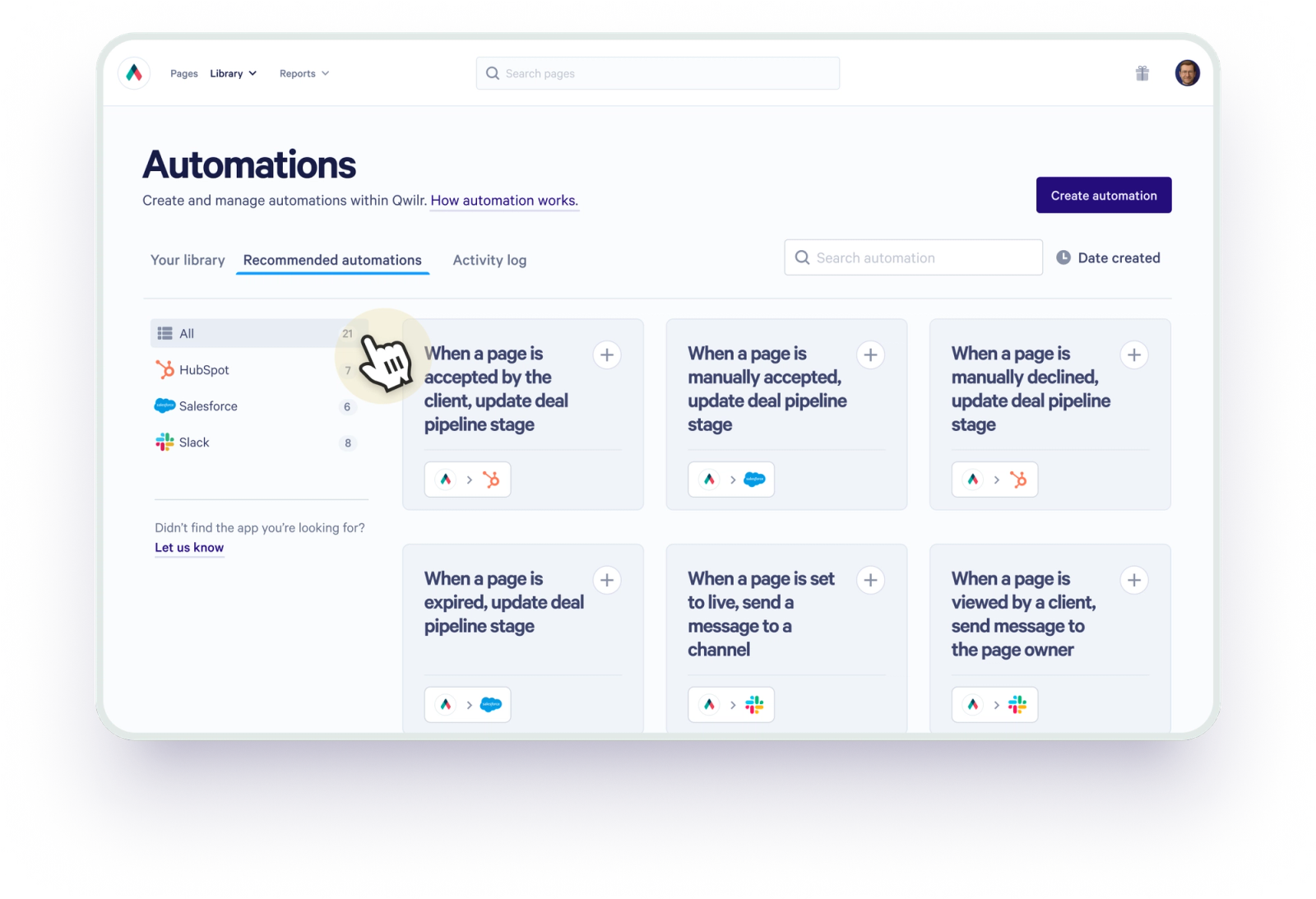
Pull this data from CRM records, platform analytics, and any shared campaign history. Qwilr's integrations with HubSpot, Salesforce, Pipedrive, and Zoho CRM allow partnership teams to pull prospect and account data directly into the proposal, grounding the audience analysis in live CRM intelligence.
3. Outline proposed initiatives and deliverables
Initiatives define what both organizations will do together, while deliverables define what each side is responsible for producing and when. Without that separation, teams align on the initiative but never assign ownership of the individual components. Assigning a defined owner, format, and deadline to each deliverable prevents misalignment.
Map proposed initiatives directly to the shared objectives defined earlier. Common examples in B2B brand collaborations and co-branding partnerships include:
- Co-branded content series distributed across both partner channels
- Joint webinars or virtual events targeting overlapping audience segments
- Shared research reports or benchmark studies with dual-branded distribution
- Cross-promotional campaigns tied to a product launch or seasonal moment — including brand ambassador activations where the proposed collaboration involves influencer or spokesperson arrangements
Attach deadlines and review milestones to every deliverable. For example, a report with a defined draft deadline, a joint review window, and a locked distribution date holds both sides accountable.
4. Build a joint timeline with dependency mapping
A joint timeline sequences every initiative, deliverable, and review milestone into a single shared schedule. Both teams need to see the full picture to plan internal resources and manage competing priorities.
Dependency mapping adds a critical layer. It flags where one team's deliverable is blocked until the other team completes theirs.
A strong joint timeline includes:
- Initiative-level milestones with target completion dates
- Deliverable-level deadlines assigned to the responsible partner
- Dependencies flagged between cross-team deliverables
- Review and approval windows built into the schedule before any external launch date
- Buffer time for legal, compliance, or executive sign-off on co-branded assets
Julia Kolesnyk, Head of Brand and Communications at Hily — a top-three dating app in the US with over 40 million users — argues that the proposal process signals how the partnership will be managed:
"More often, deals fall through because the process becomes sloppy. If your communication is inconsistent, your proposed timeline is unclear, and your approvals keep shifting, partners lose confidence. The way you manage the proposal process signals how you'll manage the partnership itself."
Build the timeline collaboratively during the proposal phase so both teams pressure-test assumptions about internal bandwidth before they become missed deadlines.
Qwilr's interactive proposal software lets both teams view and engage with the timeline within the proposal itself.
Stakeholders on both sides can review the full schedule, flag concerns, and accept terms in one document.
5. Break down the budget and resource allocation
Brand collaborations involve shared costs, split costs, and costs each partner absorbs independently. A single total figure creates friction when finance teams on either side try to map the investment to their own budget categories. A budget breakdown answers how much collaboration costs and who pays for what.
Structure the budget across three categories:
- Shared costs: Expenses both partners split, like event production, paid media, or research panel recruitment
- Partner-specific costs: Investments each organization funds independently, like internal design resources or dedicated headcount
- In-kind contributions: Non-monetary resources each side contributes, like audience access, platform distribution, or existing content assets
Where the collaboration includes configurable elements, such as tiered media spend, optional add-on initiatives, or phased rollouts, interactive elements like pricing tables give both teams the ability to model different scenarios and see cost implications in real time.
6. Address brand guidelines and approval workflows
Brand collaborations put two brands' values side by side on co-branded assets. Without these, creative teams on both sides make assumptions about logo placement, color usage, tone of voice, and messaging hierarchy.
Include a brand guidelines section in the proposal that covers the key components both teams need to produce co-branded assets consistently:
- Logo usage rules, including minimum size, clear space, and co-branding lockup formats
- Color palette and typography standards for co-branded assets — avoid relying on stock images or generic design conventions that neither brand has approved
- Tone of voice parameters, especially where the two brands differ in register or formality, or where core beliefs about communication style diverge
- Messaging hierarchy — which brand leads in which contexts and channels
- Prohibited language, imagery, or associations for either brand
Approval workflows are equally important to document. Define who reviews co-branded assets on each side, how many revision rounds the timeline allows, and the escalation path when teams disagree. Name the final approver on each side and build their review into the timeline as a fixed milestone, not an informal checkpoint.
Qwilr's group sign functionality allows designated approvers from both organizations to review and sign off on the proposal in a single document.
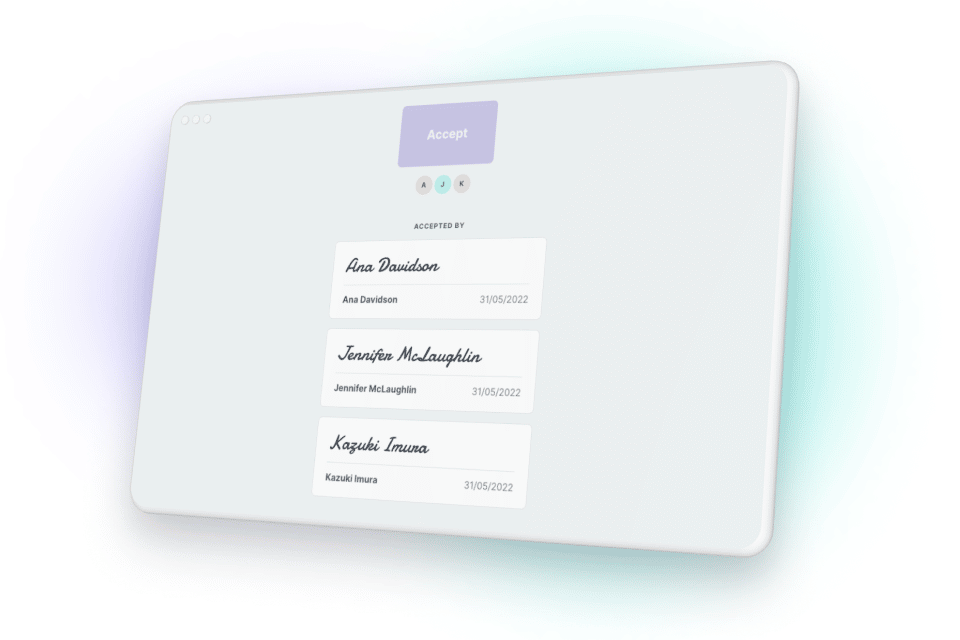
The benefits of eSignature extend beyond convenience since both teams get a clear record of who approved what and when.
7. Include a measurement framework and reporting cadence
A measurement framework gives both teams a shared basis for evaluating performance, justifying continued investment, and adjusting course mid-collaboration. Define three layers of measurement covering the key sections of performance that the partnership tracks:
- Leading indicators: Early signals like email sign-up rates from co-branded landing pages, registration numbers for joint events, or social engagement metrics across shared distribution channels
- Primary KPIs: The projected results both leadership teams agreed on during objective-setting — joint pipeline generated, new customers sourced, or audience crossover rate
- Lagging indicators: Longer-term outcomes that validate the partnership's strategic value, like customer retention influenced by partner content, brand perception shifts, or sales revenue attributed to co-marketed campaigns
Then, set the reporting cadence in the proposal:
- Weekly or biweekly: Operational metrics during active campaign windows, such as deliverable status, channel performance, and budget pacing
- Monthly: Primary KPI tracking against targets, with a shared dashboard both teams can access
- Quarterly or post-campaign: Executive-level reporting that frames outcomes against the original business case and informs renewal or expansion decisions
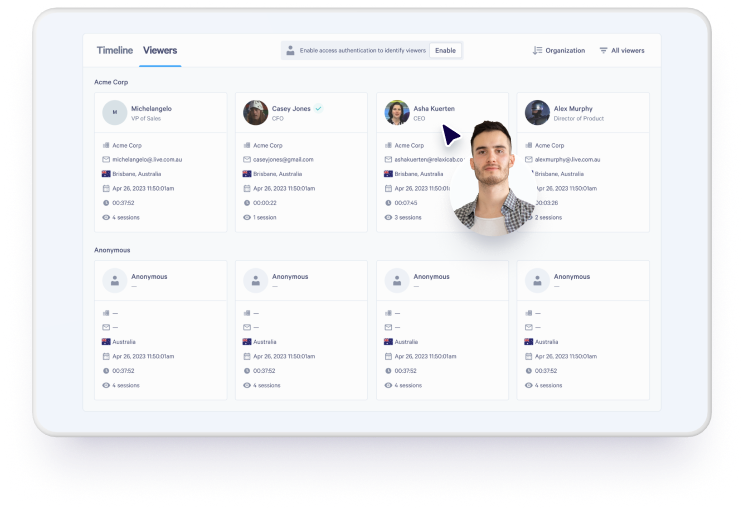
Qwilr's built-in sales content analytics provide an additional layer of engagement data. Partnership leads can see which stakeholders on either side have opened the proposal, which sections received the most attention, and whether pricing or measurement sections are being revisited — signals that inform follow-up timing and conversation focus.
8. Present next steps and a clear call to action
A proposal without defined next steps leaves the decision in limbo. Both partnership leads may be aligned, but without a clear path from proposal review to signed agreement, internal priorities shift, and momentum fades.
Proposals viewed by multiple stakeholders within the first five days are 1.9 times more likely to be accepted, according to Qwilr's analysis of over a million proposals.
With two organizations and two approval chains involved, getting the right people into the document early is a critical deal variable.
Next steps should answer three questions for the prospective partners and stakeholders reviewing the proposal:
- What happens immediately after both teams agree to move forward
- Who is responsible for initiating each project step
- What the proposed timeline looks like from approval to kickoff
For example, schedule a follow-up call within five business days to address outstanding questions from either side or a kickoff meeting to assign working-level owners and confirm the joint timeline
The call to action should be singular and direct. Presenting multiple options — "email us, book a call, or fill out this form" — introduces friction at the moment you need the partner to act. One clear action, whether that's signing the proposal or scheduling a final alignment call, keeps the process moving.
6 elements to include in a collaboration proposal
The six elements below focus on the sections that give decision-makers on both sides enough context to evaluate the partnership and move it through internal approval.
Executive summary
The executive summary gives decision-makers on both sides a complete snapshot of the collaboration before they read the full brand collaboration proposal.
Proposals that earn more than four minutes of review time close at 41% — those that get under a minute close at just 3.5%.
An executive summary that makes the strategic rationale immediately legible to both sides gives the full proposal a better chance of getting read.
Cover the key sections decision-makers need:
- The strategic rationale for the partnership
- The primary initiatives and expected results
- The total investment and resource commitment from each partner
- The proposed timeline from kickoff to first measurable results
- The KPIs that both organizations will report against
Partner overview and strategic fit
The partner overview establishes why this specific collaboration is defensible to leadership on both sides and gives both teams the quantitative data and context needed to write a strong internal business case.
Each partner's overview should be concise and focused on what the other organization's stakeholders need to evaluate:
- Company positioning and market category
- Core audience segments and geographic footprint
- Distribution channels with the highest engagement and reach
- Current strategic priorities that the collaboration directly supports
Strategic fit answers why these two brands together produce an outcome neither could achieve independently. Ground strategic fit in specifics with thorough research and evidence:
- Market access example: Partner A reaches mid-market SaaS buyers across North America. Partner B has deep penetration in EMEA enterprise accounts. Together, the collaboration gives both brands geographic access neither has alone.
- Capability pairing example: One partner produces original research that drives inbound demand. The other has an events platform with a built-in audience.
- Timing alignment: Both organizations are entering the same product category, targeting the same buyer persona, or building toward the same seasonal moment — creating a window where joint investment produces compounding returns.
Kolesnyk emphasizes that preparation matters as much as structure:
"What makes the difference in any collaboration proposal is the quality of the thinking that goes into how you approach the conversation in the first place. The marketing person sitting on the other side may not use your product, or might have a certain opinion about your product category. That makes the preparation behind the proposal even more critical."
Social proof and case studies
Social proof gives the prospective partners' decision-makers evidence that the collaboration carries manageable risk and a credible path to results. Include three types of evidence and build trust before the proposal reaches legal or procurement review:
- Past collaboration outcomes: Quantifiable results from previous brand partnerships and co-branding initiatives, such as audience growth, joint pipeline generated, campaign performance metrics, or sales revenue attributed to co-marketed initiatives.
- Audience credibility: Quantitative data points that validate the strength of each partner's audience, such as subscriber counts, average social engagement rates, event attendance figures, or community size.
- Third-party validation: Client testimonials, case studies, industry awards, or media coverage. A quote from a previous collaboration partner — specifically addressing the quality of the working relationship and the results delivered — is more persuasive than a generic brand endorsement. Including an eye-catching, well-designed cover page with partner logos and a brief vision statement also signals professionalism.
Where past collaboration data is limited, substitute with relevant campaign performance data, audience growth benchmarks, or case studies from internal initiatives that show the team's ability to execute at the scale the partnership requires.
Risk mitigation and contingency planning
Every brand collaboration carries execution risk. Acknowledging that in the brand collaboration proposal and documenting how both teams will manage it signals operational maturity and is one of the key components that separates a professional proposal from one that feels incomplete.
Common risks in brand collaborations fall into four categories, and for each, define the owner, the trigger, and the expected results of the response process.
| Risk category | Description | Trigger example | Response example | Owner example |
|---|---|---|---|---|
Brand risk | Misaligned messaging, tone inconsistencies, or a partner crisis that creates reputational exposure | One partner faces negative press coverage that could affect co-branded assets currently in market | Pause active campaigns, remove co-branded assets from public channels, and initiate a joint review before resuming | Brand lead on each side |
Execution risk | Missed deadlines, resource constraints, or internal priority shifts that delay joint deliverables | A deliverable misses its deadline by more than five business days with no revised timeline communicated | Escalate to partnership leads on both sides, reassign resources or adjust the timeline with documented scope impact | Project manager on the responsible partner's team |
Performance risk | Initiatives underperform against agreed KPIs, creating pressure to justify continued investment | Primary KPIs fall below the agreed minimum threshold at the 60- or 90-day review point | Conduct a structured review to adjust scope, reallocate budget, or modify the initiative mix | Partnership leads from both organizations |
Relationship risk | Turnover in key contacts, shifting strategic priorities, or communication breakdowns between teams | The primary partnership contact on either side leaves the organization or changes roles | Assign a transition owner within five business days and schedule an alignment call to reconfirm priorities and timelines | Departing contact's direct manager |
Exclusivity and non-compete terms
Exclusivity terms define whether either partner can pursue similar collaborations with competing organizations during the agreement period.
Without documented terms in the partnership agreement, one partner could launch a parallel collaboration with a direct competitor. It dilutes the value of the partnership, undermines the co-branding investment both sides have made, and creates legal considerations that are harder to resolve after the fact.
Address three dimensions of exclusivity:
- Category exclusivity: Whether either partner is restricted from collaborating with organizations in the same product category or market segment during the agreement
- Channel exclusivity: Whether specific distribution channels — a co-branded newsletter, a joint event series, a shared content hub — are reserved for the partnership or available for other collaborations
- Geographic or audience exclusivity: Whether the partnership holds exclusive rights within a defined region or audience segment
Lastly, define the exclusivity window clearly. Terms that extend indefinitely beyond the collaboration's active period create legal friction and reduce the likelihood of renewal. Tie exclusivity to the agreement's duration with a defined wind-down period after termination.
Renewal criteria and brand partnership exit terms
The best collaborations build renewal criteria and exit terms into the original document. Negotiating them under pressure later is harder for both sides.
Tie renewal criteria directly to the primary KPIs defined in the measurement framework. Establish a performance baseline that both teams agree constitutes success and a defined review point for renewal decisions.
Exit terms are equally important to define upfront. Undocumented exit terms create ambiguity when one side wants to wind down — drawn-out conversations, unfinished deliverables, and damaged relationships follow.
Include the following in the exit framework:
- Notice period: How far in advance either partner must communicate intent to exit — 30, 60, or 90 days, depending on collaboration complexity
- Deliverable obligations: Which in-progress deliverables must be completed and which can be terminated upon notice
- Asset ownership: Who retains rights to co-branded content, shared data, and jointly produced creative assets after the partnership ends
- Financial settlement: How outstanding costs, prepaid commitments, or revenue-sharing balances are resolved at termination
Qwilr embeds legally binding terms and conditions and eSignature directly into the brand collaboration proposal template.
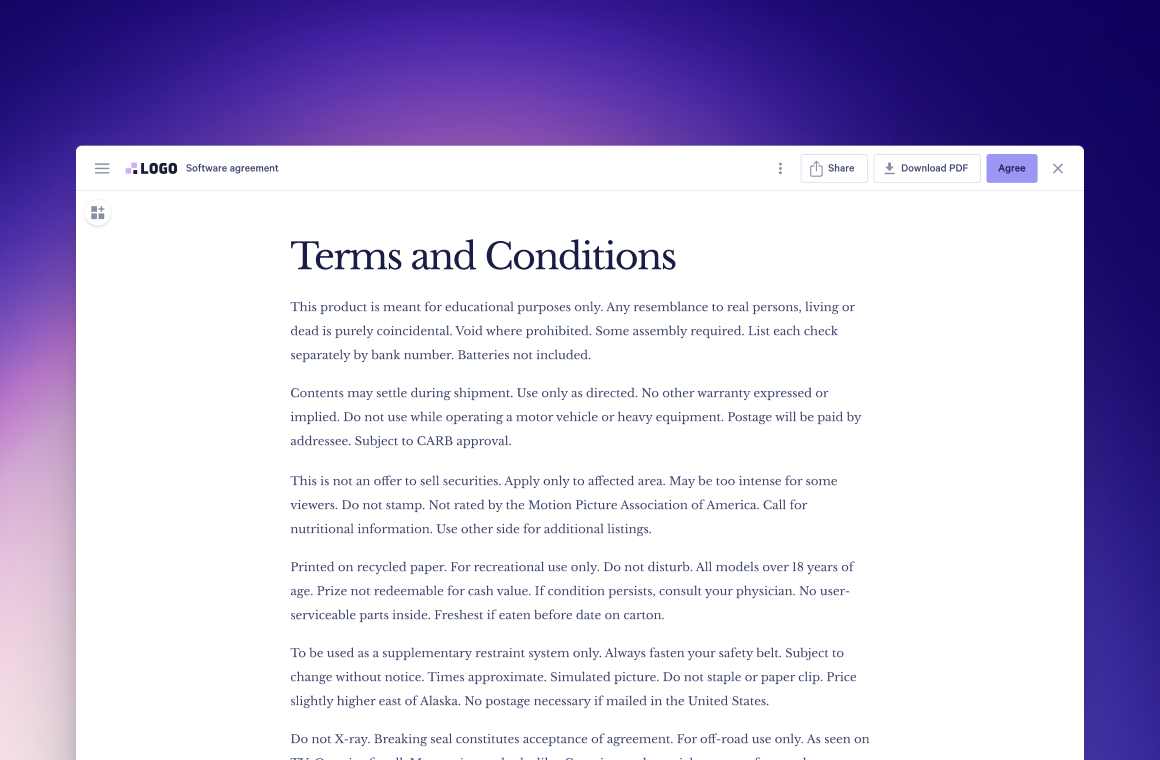
Example of a brand collaboration proposal template
Qwilr's brand collaboration proposal template gives partnership teams a repeatable starting point that covers the full structure outlined in this guide.
The template includes:
- Introduction and partner overview
- Shared objectives and strategic fit
- Proposed initiatives and deliverables
- Joint timeline
- Budget and resource allocation
- Measurement framework and expected outcomes
- Social proof and past collaboration results
- Terms, next steps, and eSignature
Qwilr proposals are professionally designed, mobile-friendly, and built for multi-stakeholder review. Partnership leads can import branding elements from both organizations, embed videos and image galleries, and add interactive quote blocks that let both teams model pricing scenarios directly within the document.
Pro tip: Before you send, run your proposal through the scorecard below
Build brand partnerships that produce measurable results with Qwilr
A brand collaboration proposal built on shared objectives, defined deliverables, and a structured measurement framework gives both teams what they need to execute and report results that justify continued investment.
Qwilr's brand collaboration proposal template combines interactive pricing, multi-stakeholder review, built-in analytics, and eSignature in a single document. Start with a 14-day free trial.
About the author

Kiran Shahid|Content Marketing Strategist
Kiran is a content marketing strategist with over nine years of experience creating research-driven content for B2B SaaS companies like HubSpot, Sprout Social, and Zapier. Her expertise in SEO, in-depth research, and data analysis allow her to create thought leadership for topics like AI, sales, productivity, content marketing, and ecommerce. When not writing, you can find her trying new foods and booking her next travel adventure."
Frequently asked questions
An effective business partnership proposal should open with an introduction, where you briefly explain the motivation and scope of the collaboration, before setting out goals, deliverables, timeline and expected results.
Research your potential collaborators thoroughly to make sure their values and goals are aligned with your own (and that you have something useful to offer). Interact with them in a low-key way on social media, to get a sense of their communication style and responsiveness, before approaching them with a brand outreach e-mail or DM to suggest a collaboration.
If they’re open to the idea, you’ll need to create a comprehensive proposal.
Your brand collaboration email needs to be snappy, with a strong subject line and a list of several compelling reasons why the collaboration would be in their best interests. Using a customized business e-mail, summarize what form the collaboration could take. You’ll need to prepare a full collaboration proposal if the brand agrees.